2026-06-03
Drinking Coffee on an Empty Stomach: Why Does It Cause Heartburn?
Discover why coffee on an empty stomach causes heartburn and learn healthy drinking habits to protect your stomach lining while enjoying your daily brew.

A refreshing cup of coffee right after waking up is a daily routine for many, but many also complain of discomfort in the pit of the stomach or heartburn after drinking it on an empty stomach. In this article, we will look into the reasons why drinking coffee on an empty stomach causes heartburn and how to drink coffee more healthily.

Why Coffee on an Empty Stomach Irritates the Stomach
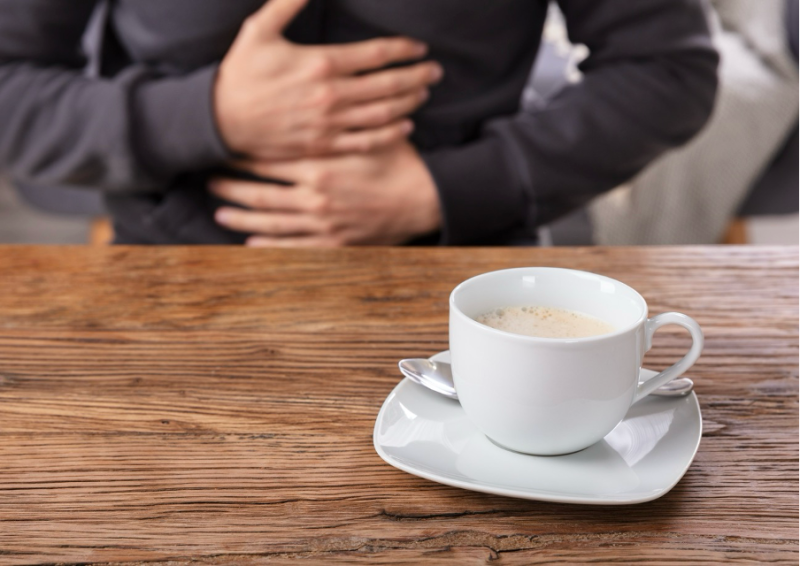
The main cause of heartburn or discomfort in the pit of the stomach after drinking coffee on an empty stomach is closely related to the increase in gastric acid secretion caused by caffeine. Endocrine cells called ‘G cells’ exist in our gastric mucosa, and these cells secrete a hormone called gastrin in response to food or nerve stimulation. Gastrin stimulates parietal cells in the stomach wall to promote the secretion of hydrochloric acid (HCl), the main component of gastric acid. Generally, gastric acid is secreted to help digest protein when food enters the stomach, but on an empty stomach, there is no food to neutralize it, so the secreted gastric acid directly irritates the gastric mucosa. In this process, symptoms such as a burning sensation in the pit of the stomach, heartburn, acid reflux, and upper abdominal discomfort may occur. In particular, because caffeine affects the overall gastrointestinal motility and gastric acid secretion control system, it becomes a factor that further exacerbates symptoms if you usually have functional dyspepsia or gastritis.
In addition, various organic acid components contained in coffee itself also affect gastric mucosal irritation. Coffee is a weakly acidic beverage with a pH of about 4.8 to 5.5 and contains several organic acids such as chlorogenic acid, caffeic acid, and quinic acid, in addition to caffeine. These components are key elements that form the unique flavor of coffee, but on an empty stomach, the organic acids in coffee can directly irritate the gastric mucosa, increasing the sensitivity of the stomach and causing heartburn. Besides this, caffeine affects the lowering of the pressure of the lower esophageal sphincter, which prevents the reflux of contents between the stomach and the esophagus. When the tension of this muscle decreases, gastric acid refluxes into the esophagus, causing symptoms such as heartburn, acid regurgitation, a foreign body sensation in the throat, hoarseness, and coughing. On an empty stomach, there is less stomach content, so gastric acid is relatively more likely to reflux into the esophagus. Actual domestic health information data also warns that drinking coffee on an empty stomach can stimulate the stomach wall as caffeine promotes gastric acid secretion, and symptoms can be intensified especially in cases of gastritis or reflux esophagitis. Therefore, if you have a gastrointestinal disease or frequently feel discomfort after drinking coffee on an empty stomach, lifestyle management such as adjusting the timing of coffee consumption to after meals or reducing the daily intake must be carried out concurrently.
1) ‘People who receive a caffeine transfusion on an empty stomach every morning… Is it okay?’, Health Chosun, 2024.
Stomach Irritation Levels by Coffee Type
The degree of irritation to the gastrointestinal mucosa can vary depending on the extraction method, whether milk is added, and the caffeine concentration. First, Americano, which we drink most commonly, contains caffeine and the inherent acidic components of coffee as they are, so as explained earlier, the increase in gastrin secretion and gastric acid irritation can appear relatively directly. On the other hand, Caffe Latte can feel relatively less irritating than Americano because the protein (casein) and fat components in milk can play a role in partially buffering gastric acid. However, since this buffering effect is limited, it is not a fundamental solution if you have a gastrointestinal disease. Also, Cold Brew is extracted with cold water for a long time, and compared to general hot-water extracted coffee, some organic acid components are relatively fewer and the acidity is lower, so it may feel relatively less burdensome for people sensitive to the acidity of coffee. In the case of decaffeinated coffee, it is a form where most of the caffeine has been removed, so the effect of directly stimulating gastric acid secretion may be relatively less than regular coffee. However, decaffeinated coffee does not have caffeine completely removed, and since the inherent organic acid components of coffee are still included, the irritation to the gastric mucosa does not completely disappear. Even if the type of coffee changes, the mechanism of G cell stimulation and increased gastric acid secretion by caffeine still operates, so in the case of gastritis or gastroesophageal reflux disease, it is more important to avoid consumption on an empty stomach and control the total intake than to choose the type of coffee.
Coffee Type | Main Characteristics | Irritation Potential |
Caffe Latte | Contains milk (protein/fat buffering) | Low |
Cold Brew | Cold extraction, relatively low acidity | Relatively Low |
Decaf | Caffeine removed (some remains), contains organic acids | Low ~ Medium |
Americano | Caffeine and organic acids intact | Medium |
Espresso | Highly concentrated caffeine/acidic components | High |
How to Drink Coffee While Protecting Stomach Health
If you cannot give up the flavor of coffee, you need strategic consumption habits that can minimize the irritation applied to the stomach. It is not simply about ‘not drinking it,’ but rather it is recommended to understand our body’s digestive mechanism and drink accordingly.
First, aim for the ‘Golden Time’ rather than immediately after waking up. Many people reach for coffee as soon as they open their eyes to wake up, but for 1–2 hours after waking up, the secretion of cortisol, a stress-regulating hormone, reaches its peak. If caffeine is added during this period, it can induce excessive cortisol secretion, increasing tolerance or increasing the tension of the digestive system. Therefore, drinking coffee about 1–2 hours after waking up, or 1 hour after lunch, helps reduce heartburn caused by excessive gastric acid secretion and more efficiently utilizes the awakening effect of caffeine.
Second, the leisure of a glass of water before drinking coffee. Rather than drinking coffee directly on an empty stomach, consuming a glass of lukewarm water first can help alleviate the irritation of organic acids in coffee directly touching the gastric mucosa. Also, coffee promotes diuresis and excretes body moisture, which can relatively weaken the protective environment of the gastric mucosa. Therefore, it is important to maintain the body’s moisture balance by supplementing sufficient moisture along with a cup of coffee.
Third, the buffering effect using milk. Latte-type drinks containing milk can be relatively more helpful in reducing gastrointestinal mucosal irritation than black coffee like Americano. This is because the protein and fat components of milk temporarily buffer gastric acid and play a role in reducing irritation to the stomach wall. However, this effect is temporary, and excessive consumption can actually stimulate gastric acid secretion due to the calcium contained in milk, so it is important to maintain an appropriate amount. If you have lactose intolerance, using lactose-free milk or plant-based alternative drinks is also a way. In addition, adding sugar such as sugar or syrup can lower the pressure of the lower esophageal sphincter and cause reflux symptoms, so caution is required.
Fourth, no excessively hot coffee! The esophagus and gastric mucosa are vulnerable to thermal stimulation. In particular, repeatedly consuming hot drinks above 65°C can cause microscopic damage to the mucosa and trigger inflammatory reactions. In fact, high-temperature beverages have been classified as a potential carcinogenic factor including esophageal cancer, so caution is required. It is helpful for gastrointestinal health to consume coffee after letting it cool down a bit to a warm state, rather than too hot. 2) Seoul Shinmun, ‘Open the lid and let it cool… A hot cup over 65 degrees, esophageal cancer warning’, 2026. Coffee has become an element that supports the daily life and vitality of modern people beyond a simple luxury food. However, even with the same cup of coffee, the impact on our body can vary depending on the timing and method of consumption. In particular, if repeated heartburn or reflux symptoms persist, it may be a signal of a gastrointestinal disease rather than a simple lifestyle problem, so professional medical treatment is recommended. We hope you enjoy coffee more healthily by carefully observing your body condition and adjusting the timing and method of consumption. 2) Seoul Shinmun, ‘Open the lid and let it cool… A hot cup over 65 degrees, esophageal cancer warning’, 2026. Review: Professor Sang-in Lee, Department of Gastroenterology, Chaum.
Field of Treatment: Gastrointestinal motility disorders, Gastroscopy/Colonoscopy, Early diagnosis of stomach/colon cancer. Professor Sang-in Lee, who is currently in charge of the Department of Gastroenterology at Chaum, is striving for the early detection of cancer through various endoscopic examinations for gastrointestinal diseases and is performing mucosal resection and polyp removal using endoscopes. In particular, he contributed greatly to the early detection and prevention of stomach cancer by jointly participating in establishing the gastroscopy screening cycle and age recommended by the National Cancer Center. Inquiry: Chaum Department of Gastroenterology 02-3015-5300 | Outpatient Clinic Center, 2nd Floor, Chaum, 4-1 Cheongdam-dong, Gangnam-gu, Seoul

Frequently Asked Questions
Why does my stomach burn when I drink coffee on an empty stomach?
Yes, it's because caffeine and organic acids irritate the stomach lining. When caffeine enters an empty stomach, it promotes gastric acid secretion, and since there's no food to neutralize it, the gastric acid directly irritates the stomach wall. This can cause a burning sensation or heartburn in the pit of the stomach.
Is decaffeinated coffee okay to drink on an empty stomach?
No, decaffeinated coffee can also irritate the stomach lining. Although most of the caffeine is removed, making it less irritating than regular coffee, the inherent organic acid components of coffee remain, so there is still a possibility of causing heartburn when consumed on an empty stomach.
Are there ways to reduce stomach irritation from coffee?
Yes, it is good to drink a glass of lukewarm water before drinking coffee. Water helps to alleviate the irritation of organic acids on the stomach lining and replenishes body water loss due to diuretic action, helping to maintain a protective environment for the stomach lining.
Can I drink coffee immediately after waking up in the morning?
No, it is recommended to drink it 1-2 hours after waking up. Immediately after waking up, the secretion of the stress hormone cortisol is at its peak, and adding caffeine at this time can increase digestive system tension and induce excessive gastric acid secretion.
Is cafe latte less irritating to the stomach than americano?
Yes, lattes containing milk are relatively less irritating. This is because the protein and fat components in milk temporarily buffer gastric acid, reducing irritation to the stomach wall. However, if consumed excessively, the calcium in milk can actually stimulate gastric acid, so you should drink an appropriate amount.