2026-06-03
Spring Alert: Hard Tick Warning! Symptoms and Prevention Tips
Learn about SFTS symptoms, hard tick behavior, and essential prevention tips for safe outdoor activities during spring and autumn.
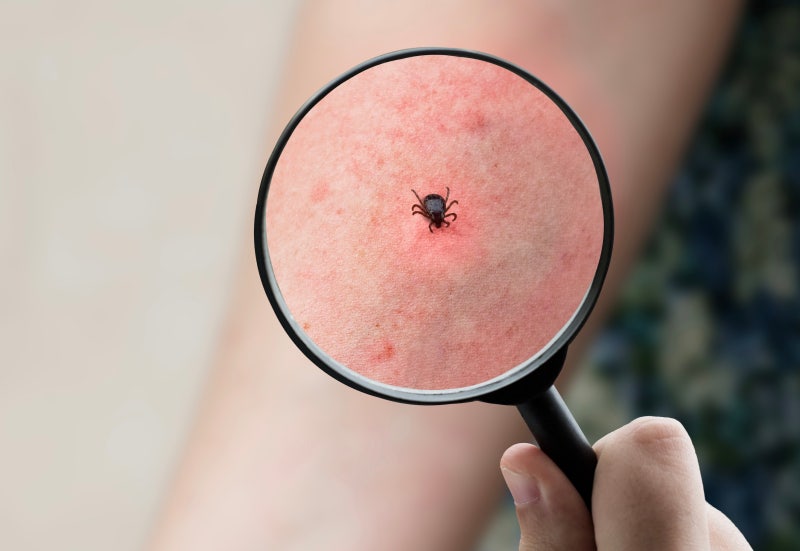
As the weather warms up and outdoor activities increase, the risk of unexpected infections also rises. Recently, the Korea Disease Control and Prevention Agency (KDCA) has been operating a nationwide hard tick monitoring system from April to November every year. Since the first case was reported in Korea in 2013, more than 2,300 cumulative cases have been documented.1) In this article, we will explore the characteristics of hard tick-borne infectious diseases, which are increasing annually, and how to prevent them.
1) Yonhap News, ‘Spring Outdoor Activities Hard Tick Caution... Nationwide Monitoring System Starts Operation’, 2026.
Hard Tick Occurrence Patterns
Hard ticks go through a life cycle of larva, nymph, and adult, parasitizing different hosts at each stage. A key point to note is that they can transmit the Severe Fever with Thrombocytopenia Syndrome (SFTS) virus at all stages of growth. Their activity patterns according to the season are also relatively distinct. In April and May, when the weather gets warmer, nymphs begin their activity, and in June and July, they grow into adults and lay eggs. Subsequently, from September to November, the number of larvae increases, leading to a higher overall density. While various species of hard ticks are identified in Korea, the Haemaphysalis longicornis (bush tick) is reported to account for the highest proportion. Since ticks mainly inhabit grasslands or meadows, there is a high possibility of contact with humans during outdoor activities such as hiking, camping, and farming. Furthermore, due to rising temperatures and environmental changes, their activity period is gradually lengthening. Therefore, this is not a problem limited to a specific time but a situation that requires continuous attention and management from spring to autumn.
SFTS Symptoms and Domestic Status
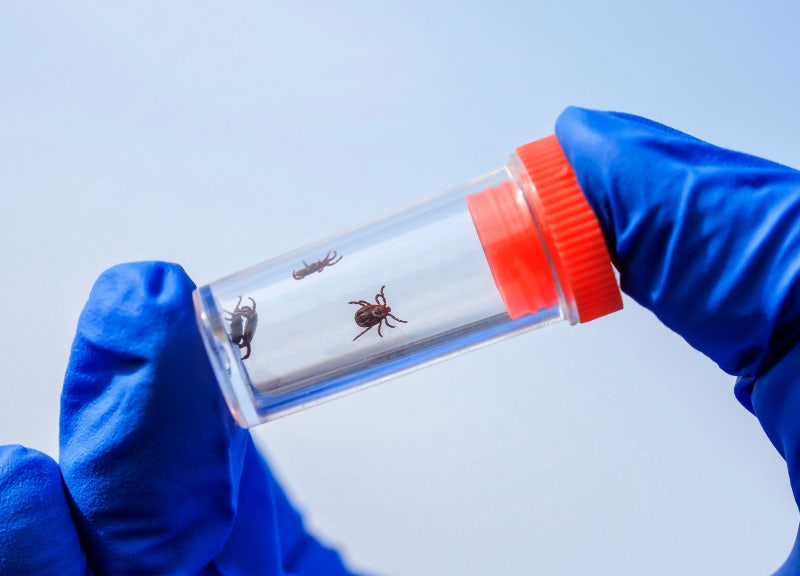
SFTS (Severe Fever with Thrombocytopenia Syndrome) is a representative tick-borne infectious disease transmitted to humans through hard ticks. Symptoms usually appear after an incubation period of about 5 to 14 days after being bitten by an infected tick. In the early stages, high fever is often accompanied by digestive symptoms such as nausea, vomiting, and diarrhea. Later, as platelet and white blood cell counts decrease, bruising may occur easily or general weakness may set in, and in some cases, it can lead to organ dysfunction. During the viral infection process, the risk of bleeding increases as platelets decrease, and if abnormal immune responses overlap, the condition can progress to a severe state. In particular, the elderly or those with underlying diseases are known to experience rapid symptom worsening. In fact, domestic reports have documented cases where SFTS patients’ conditions deteriorated rapidly after hospitalization, leading to intensive care and eventually multiple organ failure.2) 2) Pharm News, ‘Spring Hard Tick Activity Begins, Urging SFTS Prevention’, 2026.
Because the general condition of some patients can deteriorate rapidly within a short period, recognition at the early symptom stage is crucial. Since there is currently no preventive vaccine or specific treatment, the most important thing is to avoid infection itself. If you experience unexplained fever or digestive symptoms after recent outdoor activities, it is recommended to seek medical attention early, considering the possibility of tick exposure rather than dismissing it as a simple body ache.
Is There a Risk of Hard Ticks in Urban Parks?

It is easy to think that urban parks are relatively safe, but recently, cases of hard tick exposure have been steadily reported even in living areas such as Han River parks.3) This change is not a mere coincidence but is closely related to environmental changes. With the expansion of urban green spaces and the widening movement range of water deer, wild mice, and birds, the habitat of hard ticks is also shifting into urban areas. Even in well-maintained parks, the bushes at the edges, leaf litter layers, and damp shaded areas are known to be suitable environments for hard ticks to live. 3) MBC Newsdesk, ‘Even in Han River Parks... Scary Hard Ticks Clustered Together’, 2020.
Hard ticks do not move on their own but rather cling to the ends of grass or leaves and attach themselves when humans or animals brush past. Therefore, spreading a mat directly on the grass or walking through bushes with pets can increase the risk of exposure. Additionally, there are reports of secondary exposure where ticks attached to a dog’s fur after a walk transfer to the owner. Therefore, it is important to make basic prevention rules a habit during daily outdoor activities such as walking or picnicking in urban parks.
Is It Okay to Remove a Hard Tick Immediately if Bitten?
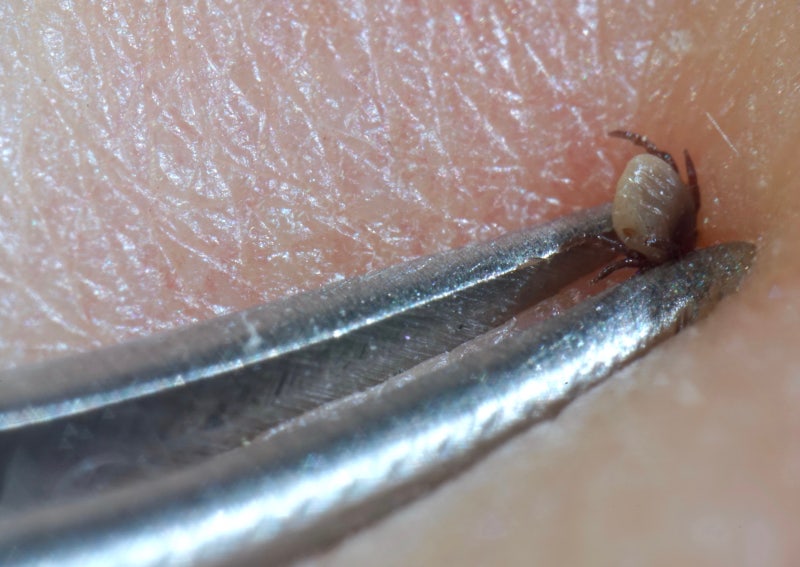
If you are bitten by a hard tick, should you remove it immediately? In conclusion, while it is not recommended to remove it forcibly using the wrong method, it is important to remove it quickly using the correct method if possible.
Because hard ticks feed while firmly fixed to the skin, pulling or twisting them by hand can cause parts to remain in the skin or body fluids to flow back, increasing the risk of infection. The KDCA advises using tweezers to grasp the tick’s mouthparts as close to the skin as possible and pulling it out slowly. If removal is difficult or parts remain, visiting a medical institution is recommended. It is also emphasized that improper removal can lead to skin damage or secondary infection. Therefore, if a hard tick is found, attempt to remove it safely within possible limits, but if removal is difficult or incomplete, you must visit a medical institution.
Step | Content |
1 | Check for ticks attached to the skin (do not remove forcibly) |
2 | Do not pull or twist with hands |
3 | Visit a medical institution as quickly as possible |
4 | Proceed with safe removal by medical staff |
5 | Disinfect and manage the wound area after removal |
6 | Observe for symptoms such as fever, muscle pain, or diarrhea within 2 weeks |
Tick Bite Prevention Rules in Daily Life
The key to SFTS prevention is not getting bitten by hard ticks. To achieve this, management at each stage—before, during, and after activities—is important. During activities, it is crucial to reduce direct contact with grass or bushes, and it is basic to minimize skin exposure by wearing long sleeves, long pants, and a hat. In particular, tucking the ends of your pants into your socks can prevent ticks from directly accessing your skin, and using tick repellent is also helpful. When sitting on grass, it is better to use a mat, and it is safer to stay on designated trails as much as possible.
Also, when participating in activities with pets, it is necessary to minimize their access to thickets. After activities, wash your skin thoroughly by showering and carefully check areas where the skin folds, such as behind the ears, armpits, and behind the knees. It is recommended to wash clothes immediately to remove any ticks that may remain.
Category | Key Practices |
Before Activity | Wear long clothes, minimize skin exposure, use repellent |
During Activity | Minimize contact with grass, use mats, stay on trails |
After Activity | Shower, check body, wash clothes |
Following basic prevention rules can significantly lower the risk of infection. Spring is a time when outdoor activities increase, but the possibility of exposure to infectious diseases also rises. SFTS is an infectious disease with a high fatality rate, but it is also a disease where prevention is most effective. Basic actions such as managing clothing, choosing activity paths, and checking yourself after returning home are the most realistic and effective prevention methods. Furthermore, since urban parks and daily outdoor activities are not completely safe environments, consistently practicing these small actions is the surest way to protect your health.
- Reference: Korea Disease Control and Prevention Agency (KDCA)
https://www.kdca.go.kr/kdca/2848/subview.do?enc=Zm5jdDF8QEB8JTJGYmJzJTJGa2RjYSUyRjQyJTJGMzEwNzM2JTJGYXJ0Y2xWaWV3LmRvJTNG
Inquiries
Chaum Health Life Center 02-3015-5005 | 2/3F Chaum, 442 Dosan-daero (4-1 Cheongdam-dong), Gangnam-gu, Seoul

Frequently Asked Questions
What symptoms appear if bitten by a tick?
High fever, nausea, vomiting, and diarrhea are the main digestive symptoms that appear. Symptoms occur after an incubation period of 5 to 14 days after a tick bite, and then platelet and white blood cell counts decrease, which can lead to bruising or general weakness. Caution is needed as there is a risk of progression to severe illness.
Should I be careful about ticks even when walking in city parks?
Yes, there is a risk of exposure to ticks even in city parks. As urban green spaces expand, the movement range of wild animals widens, leading to ticks entering urban areas. Even in parks with well-maintained lawns, ticks can inhabit the edges of bushes or leaf litter, so caution is required.
Can I remove a tick attached to my skin with my bare hands?
No, it is not recommended to forcibly pull or twist it off with your hands. Part of the tick may remain in the skin or body fluids may regurgitate, increasing the risk of infection. You should grasp the mouthparts with tweezers and slowly remove it, or visit a medical institution as quickly as possible for safe removal.
Is there a vaccine to prevent SFTS (Severe Fever with Thrombocytopenia Syndrome)?
No, there is currently no vaccine or specific treatment to prevent SFTS. Therefore, preventing tick bites is the best approach. When outdoors, wear long clothing to minimize skin exposure, use insect repellent, and be sure to shower and wash clothes after returning home.