2026-06-03
Your Skin Reflects What You Eat!
Discover how diet impacts skin health through chronic inflammation and fatty acid composition, featuring the benefits of salmon and a healthy recipe.
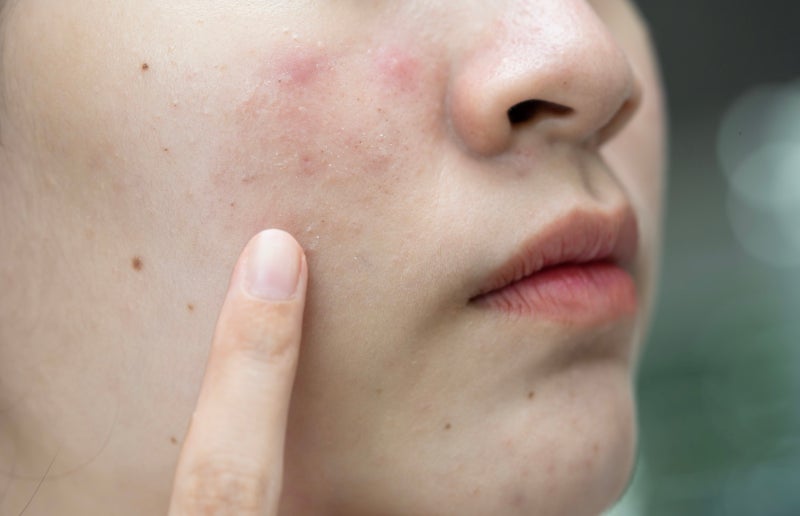
There are days when you look in the mirror toward evening and notice your skin looks exceptionally dull or dry compared to other days. While it is easy to dismiss this as mere fatigue, the skin is the largest organ in our body and a tissue that reacts very sensitively to metabolism, immunity, and oxidative stress. Consequently, even small changes in the internal environment can manifest immediately on the skin.
Recent research in dermatology and immunology has highlighted ‘low-grade chronic inflammation’ as a critical concept. Even without visible inflammation, if low levels of inflammation persist within the body, collagen in the skin gradually breaks down and the skin barrier weakens, making it prone to dryness and sensitivity. Simultaneously, everyday factors such as UV rays, stress, lack of sleep, and blood sugar spikes exacerbate micro-inflammation, causing you to feel changes in skin condition more rapidly. Another vital factor in skin health is the fatty acid composition of cell membranes. Skin cell membranes are composed of fats, and the flexibility of the membrane, its moisture-retention capacity, and its sensitivity to inflammatory responses vary depending on which fatty acids are included and in what amounts. Furthermore, the accumulation of reactive oxygen species promotes collagen degradation and pigment formation, accelerating photoaging. Therefore, for skin health, one must simultaneously consider inflammation control, cell membrane stabilization, and antioxidant defense.
Omega-3 fatty acids are a representative ingredient that alleviates skin inflammation. These fatty acids suppress the production of inflammatory cytokines and increase the flexibility of cell membranes, helping to reduce skin moisture loss. Conversely, trans fats—abundant in processed and fast foods—increase inflammatory cytokines, hinder blood flow, and increase reactive oxygen species, thereby reducing the skin’s resilience. To maintain healthy skin, it is best to reduce their intake as much as possible.
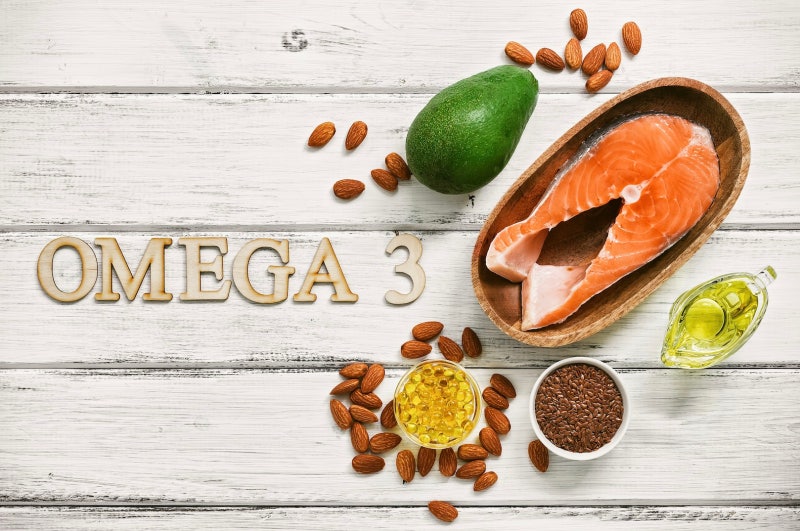
As skin is exposed to UV rays and stress, it easily generates reactive oxygen species. Antioxidants that suppress this include carotenoids, vitamins C and E, and astaxanthin. These ingredients play a role in protecting skin elasticity and brightness by preventing collagen breakdown and pigment production. Vitamin D stabilizes skin immune function and is involved in the synthesis of proteins and lipids that constitute the epidermal barrier. A deficiency can make the skin easily sensitive and dry, leaving it vulnerable to external stimuli.
Salmon is a representative food that aids skin health as it is rich in Omega-3 fatty acids, the antioxidant astaxanthin, and Vitamin D—all of which the skin requires. Omega-3 alleviates skin inflammation and stabilizes cell membranes, while astaxanthin helps slow photoaging by suppressing the generation of reactive oxygen species caused by UV rays. Since Vitamin D regulates skin immunity and stabilizes inflammatory responses, salmon can be considered an ingredient that possesses all three core functions. The cooking method is also important for healthy salmon consumption. ‘Salmon en Papillote’ is a method of steaming ingredients inside paper or foil; because it is not directly exposed to high heat, it prevents the oxidation of Omega-3 fatty acids and minimizes the destruction of antioxidants. Since almost no oil is used, there is no exposure to trans fats, and the moisture from the ingredients preserves nutrients, making it a skin-friendly dish.
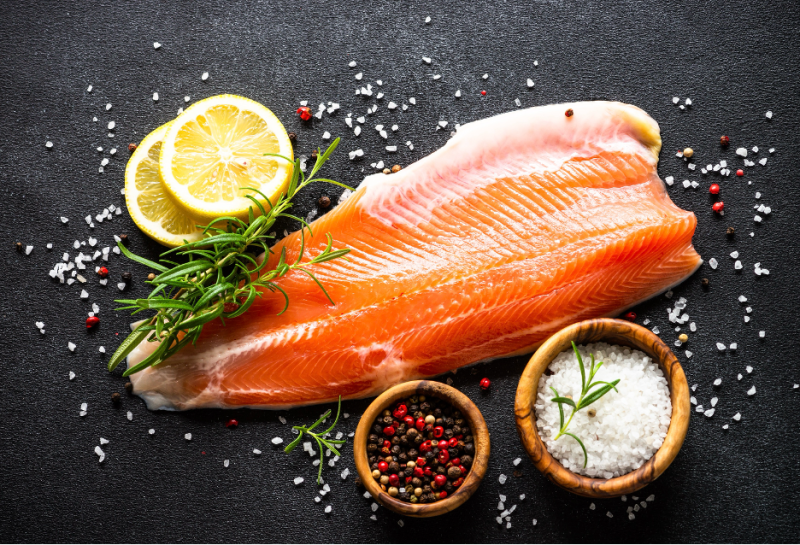
It is even better to consume salmon consistently 2 to 3 times a week. This is because the effects of strengthening the skin barrier and alleviating inflammation appear when Omega-3 and antioxidants accumulate in the body. On days you eat salmon, reducing the intake of processed foods or fried items high in trans fats will enhance the anti-inflammatory effects. Additionally, pairing it with fruits or vegetables rich in Vitamin C creates a synergistic effect with the antioxidants in salmon, further boosting the skin’s protective capabilities.
In many cases, the skin accepts the influence of food more quickly and deeply than cosmetics. Salmon en Papillote provides the nutrients the skin needs naturally while minimizing nutrient loss during the cooking process, making it a ‘kill two birds with one stone’ approach. The skin responds to the food we eat more honestly than we might think. To achieve healthy skin on the outside, we must first take care of our internal health.
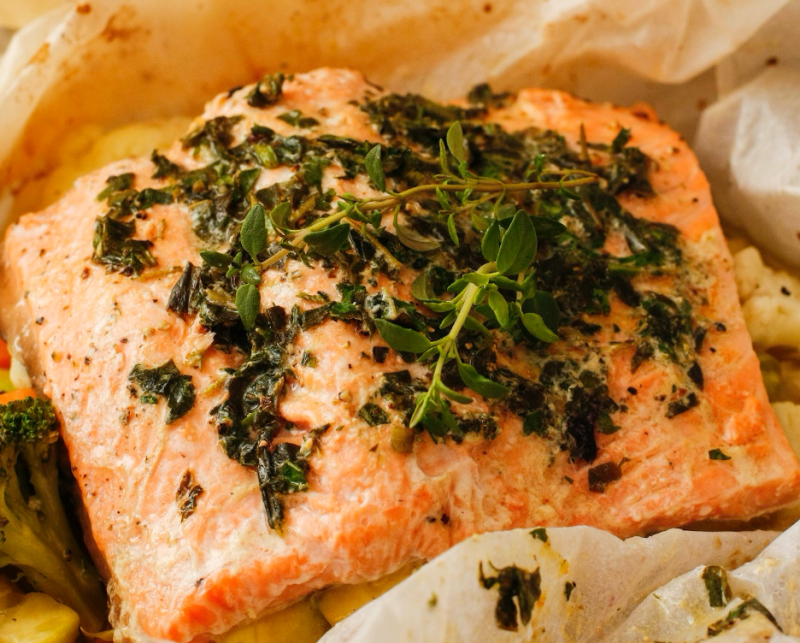
How to Make Salmon en Papillote |
*Ingredients (Serves 2): 200g Salmon, 6 Shrimps, 3 Button Mushrooms, 2 Asparagus stalks (40g), 1/3 Onion (70g), 6 Garlic cloves, 1 Lemon, 20g Rosemary, 2 tbsp Ghee butter, 1/2 tsp Salt, 1 tsp Pepper • Thinly slice the mushrooms, garlic, onion, and half the lemon. Cut the asparagus into appropriate lengths. • Lay the onion on parchment paper, place the salmon on top, and squeeze the juice from half the lemon over it. Sprinkle with salt and pepper. • Add garlic, mushrooms, asparagus, shrimp, and lemon slices, then top with rosemary and ghee butter. • Fold the parchment paper and roll the ends once more to seal it tightly. • Place in an air fryer and cook at 180°C for 25-30 minutes. If using an oven, preheat to 200°C and cook for 25-30 minutes. |
- Written and Supervised by: Professor Lee Kyung-mi, Chaum Food Therapy [Chronic Inflammation Clinic]
- Source: https://gonggam.korea.kr/newsContentView.es?mid=a12605000000§ion_id=NCCD_CULTURE_TOTAL&content=&code_cd=&nPage=1&b_list=9&news_id=2e47a0f8-85fe-45cd-8b20-38e5f2ad2097
Areas of Practice: Chronic inflammation, dietary habit change coaching, medical nutrition therapy, stress management. Professor Lee Kyung-mi of Chaum Food Therapy [Chronic Inflammation Clinic] and CHA University Graduate School of Medicine is a family medicine specialist focusing on the prevention and treatment of diseases through food and stress solutions. After graduating from Seoul National University College of Medicine, she completed the Integrative Medicine program at the University of Arizona, the global center of integrative medicine, to study a new form of medicine focused on ‘healing’ beyond pharmaceutical prescriptions and surgery. Inquiry: Chaum Food Therapy [Chronic Inflammation Clinic] 02-3015-5300 | 3F Health Life Center, Chaum, 4-1 Cheongdam-dong, Gangnam-gu, Seoul

Frequently Asked Questions
What causes dull and dry skin?
Dull and dry skin may not simply be due to fatigue. Persistent low-grade chronic inflammation in the body can break down collagen in the skin and weaken the skin barrier, making it prone to dryness and sensitivity. UV rays, stress, and lack of sleep also play a role.
What nutrients are beneficial for skin health?
Omega-3 fatty acids, carotenoids, vitamins C and E, astaxanthin, and vitamin D are beneficial for skin health. Omega-3s alleviate inflammation, antioxidants prevent collagen breakdown and pigment production, and vitamin D stabilizes skin immune function.
What foods should be avoided for skin health?
To maintain skin health, it is advisable to reduce the consumption of processed foods and fast food high in trans fats. These foods can increase inflammatory cytokines and reactive oxygen species, thereby reducing the skin's ability to recover.
Salmon is said to be good for skin health, what ingredients are responsible for this?
Salmon is good for skin health because it is rich in omega-3 fatty acids, the antioxidant astaxanthin, and vitamin D. Omega-3s help reduce inflammation, astaxanthin suppresses photoaging, and vitamin D contributes to regulating skin immunity.
How should salmon be cooked to be more effective for skin health?
The salmon en papillote cooking method is effective for skin health. Steaming it in paper or foil prevents the oxidation of omega-3 fatty acids, minimizes the destruction of antioxidants, and uses very little oil, reducing exposure to trans fats.
How often should salmon be eaten per week?
It is recommended to consume salmon consistently 2-3 times a week. Regular intake is important because the effects of strengthening the skin barrier and reducing inflammation from omega-3s and antioxidants appear when they accumulate in the body.