2026-06-03
Mastering Health During the Change of Seasons: Nature’s Prescription for Homeostasis and Immunity (Dietary Guide - Mushroom Perilla Soup)
Learn how to maintain homeostasis and boost immunity during seasonal changes with expert advice and a nutritious Mushroom Perilla Soup recipe.

Morning temperatures have dropped to single digits, and the chilly wind marks the threshold of early winter.
The change of seasons is not just a point where the weather shifts; it is a time when our body’s ‘homeostasis’ operates holistically to adapt to a new environment. When homeostasis is shaken due to large daily temperature fluctuations, the risk of lowered immunity and cardiovascular diseases increases. Today, Professor Lee Kyung-mi from the Chronic Inflammation Clinic (Food Therapy) will explain the importance of health management during seasonal transitions and share a delicious recipe to help you stay healthy.
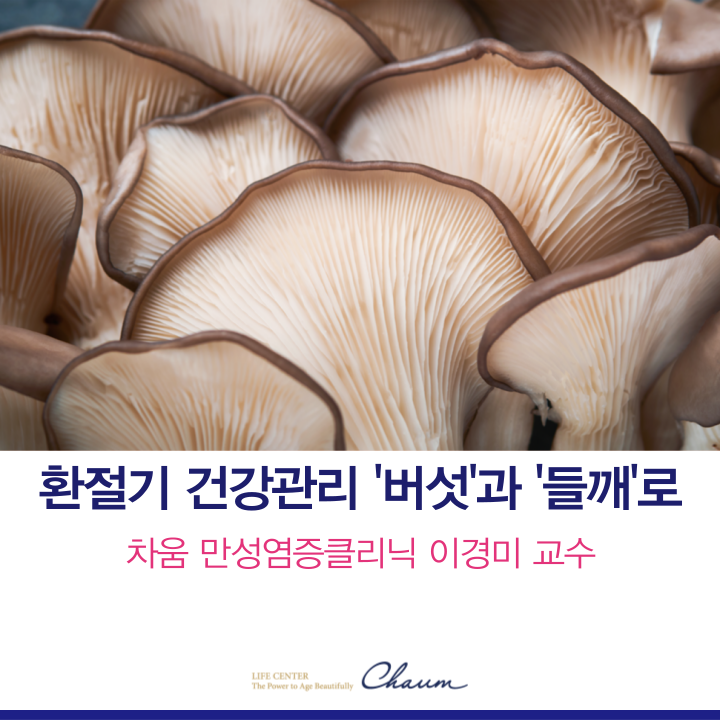
How Temperature Changes During Seasonal Transitions Affect Our Body
Our body has a self-regulating ability to maintain a constant internal physiological state—such as body temperature, blood pressure, hydration, electrolytes, blood sugar, and hormone levels—even when the external environment changes. This is called ‘homeostasis.’ This function works through the sophisticated interconnection of the autonomic nervous system, endocrine system, and immune system. For example, when the weather suddenly turns cold, skin blood vessels constrict to reduce heat loss, and the sympathetic nervous system is activated, raising heart rate and blood pressure. Conversely, in a hot environment, blood vessels dilate to release heat, and the parasympathetic nervous system is activated to decrease the heart rate.
Why Maintaining Homeostasis is Crucial: Increased Risk of Cardiovascular Diseases

Homeostasis is an essential response for survival, but if changes are sudden or repetitive, the system can become overloaded. While our bodies can handle changes within a small range, during seasonal transitions where the daily temperature gap exceeds 10 degrees Celsius, reactions like temperature regulation and vascular constriction repeat excessively, causing the balance to falter. When this balance is broken, one can easily become fatigued or experience a drop in immunity. According to various epidemiological studies, for every 1-degree increase in the daily temperature range, the incidence of myocardial infarction increases by about 2–3%. The repeated constriction and dilation of blood vessels during these periods cause sudden spikes in blood pressure, putting a load on the heart and increasing the risk of cardiovascular and cerebrovascular diseases such as hypertension, stroke, and myocardial infarction. Especially for those with chronic metabolic diseases like diabetes, high blood pressure, or hyperlipidemia, vascular management during seasonal changes is essential. Furthermore, as temperatures drop, blood flow to the upper respiratory tract mucosa decreases, weakening local immune responses and making it easier for viruses to proliferate. Since respiratory infection rates rise in cold environments, lifestyle management that considers both vascular health and immune regulation is necessary.
Ingredients for Protecting Homeostasis: ① Perilla Seeds
Seasonal transitions mean more than just a change in temperature. It is a time when the body experiences an overload in maintaining homeostasis while responding to external changes, making it vital to care for both blood vessels and immunity. Dietary adjustment during this period is the easiest and most effective way to restore balance. Representative ingredients that help restore internal balance and excel in both immune and vascular health are perilla seeds and mushrooms.
Perilla seeds are not only a beloved ingredient in Korea for their savory flavor but are also natural medicinal powerhouses with incredible physiological value. Most of the fat in perilla seeds is alpha-linolenic acid (ALA), a plant-based omega-3 fatty acid. This component is partially converted into eicosapentaenoic acid (EPA) and docosahexaenoic acid (DHA) in the body, which helps lower ‘bad’ LDL cholesterol, reduces inflammation in the blood vessels, and prevents blood clots, keeping the vessels clean. They are also rich in Vitamin E, a powerful antioxidant that prevents cell aging and helps maintain healthy vascular walls.
Ingredients for Protecting Homeostasis: ② Mushrooms 🍄
Mushrooms are a representative low-calorie, high-fiber food that helps boost immunity. In particular, the beta-glucan found in mushrooms stimulates immune cells in the gut, activating cells such as macrophages and T-cells. This increases resistance to bacterial infections and helps balance immune functions. Consuming them with the aforementioned perilla seeds creates a synergistic effect. The omega-3 fatty acids in perilla seeds promote the excretion of bile acids to lower cholesterol, while the dietary fiber in mushrooms prevents these bile acids from being reabsorbed in the gut, doubling the cholesterol-lowering effect.
A Recipe to Protect Homeostasis and Boost Immunity: Mushroom Perilla Soup
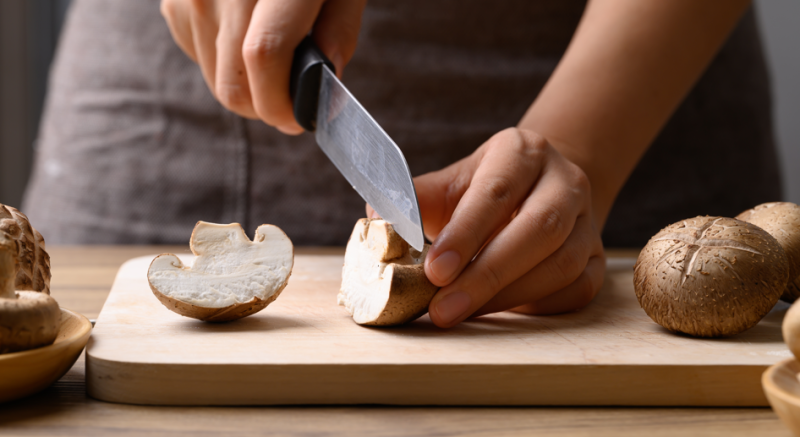
To gain the health benefits of both perilla and mushrooms, I recommend making ‘Mushroom Perilla Soup’ as a nutritional meal for the changing seasons. Using a variety of seasonal autumn mushrooms like oyster, shiitake, neungi, and coral mushrooms will provide even richer dietary fiber, minerals, and antioxidants. When cooking, it is better to boil the mushrooms directly rather than blanching them beforehand.
This is because beta-glucan is a water-soluble polysaccharide that is easily lost during the blanching process. Additionally, it is important to add the perilla seed powder at the very end after lowering the heat once the soup has boiled. Omega-3 fatty acids oxidize easily at temperatures above 150°C. Heating them for a short time at a lower temperature preserves their physiological activity. Grinding raw perilla seeds directly prevents fatty acid degradation and maximizes flavor and nutrition. Adding a little soybean paste (doenjang) can also support the growth of beneficial gut bacteria, positively impacting immune regulation.
Seasonal Nutritional Meal: Mushroom Perilla Soup
Ingredients (Serves 2): 1 handful of oyster mushrooms (40g), 6 shiitake mushrooms, 1/2 king oyster mushroom, 1 handful of enoki mushrooms (40g), 80g radish, 1/2 red chili, 1/2 green chili, 10cm green onion, 2 tsp soup soy sauce, 2 tsp minced garlic, 2 tbsp perilla seed powder, starch water (1 tbsp glutinous rice powder + 3 tbsp water), 500cc anchovy-kelp stock. Instructions: Tear the oyster and enoki mushrooms into bite-sized pieces. Slice the shiitake, king oyster mushrooms, and radish into bite-sized pieces. Thinly slice the green onion and chilies. Boil the anchovy-kelp stock in a pot, then add the radish and mushrooms once it boils. When it comes to a boil again, season with minced garlic, soy sauce, and sea salt, then stir in the starch water to adjust the consistency. While stirring, add the sliced green onion, chilies, and perilla seed powder, and simmer briefly. *This content is in collaboration with ‘K-Gonggam,’ featuring Professor Lee Kyung-mi of the Chaum Chronic Inflammation Clinic [Food Therapy]. During these seasonal transitions where the body constantly balances itself to adapt, make sure to restore that balance through your meals. A warm bowl of soup can be a reliable source of strength to protect your health against the repeating cycles of the seasons.
Field of Practice: Chronic inflammation, dietary coaching, medical nutrition therapy, stress management. Professor Lee Kyung-mi of the Chaum Food Therapy [Chronic Inflammation Clinic] and CHA University Graduate School of Medicine is a family medicine specialist focusing on disease prevention and treatment through food and stress solutions. After graduating from Seoul National University College of Medicine, she completed the Integrative Medicine program at the University of Arizona, a global center for integrative medicine, to study a new form of medicine focused on ‘healing’ beyond just prescriptions and surgery. Inquiries: Chaum Food Therapy [Chronic Inflammation Clinic] 02-3015-5300 | 3rd Floor, Health Life Center, Chaum, 4-1 Cheongdam-dong, Gangnam-gu, Seoul.

Frequently Asked Questions
Why does the risk of cardiovascular and cerebrovascular diseases increase during seasonal changes?
Yes, because when the daily temperature difference exceeds 10 degrees Celsius, blood vessels repeatedly contract and expand, causing blood pressure to rise sharply. This puts a strain on the heart, increasing the risk of hypertension, stroke, and myocardial infarction, so individuals with chronic metabolic diseases should be especially careful.
How does perilla help with vascular health during seasonal changes?
Perilla is rich in alpha-linolenic acid, a plant-based omega-3 fatty acid, which greatly helps vascular health. This component lowers bad cholesterol (LDL), reduces inflammation in blood vessels, and prevents blood clot formation, helping to keep blood vessels clean.
What are the benefits of eating mushrooms and perilla together?
Consuming these two ingredients together creates a powerful synergistic effect in lowering cholesterol. This is because perilla's omega-3 promotes bile acid excretion, and the rich dietary fiber in mushrooms prevents the reabsorption of excreted bile acids in the intestines.
Should mushrooms be blanched before making perilla mushroom soup?
No, it is better to cook mushrooms directly without blanching them beforehand. Beta-glucan, an immune-boosting component abundantly found in mushrooms, is a water-soluble polysaccharide, so nutrients can dissolve and be lost in the water during the blanching process.
When is the best time to add perilla powder during cooking?
It is best to add it at the very last stage of cooking, after the broth has fully boiled and the heat has been lowered. Perilla's omega-3 fatty acids are easily oxidized above 150 degrees Celsius, so they should be heated at a low temperature for a short time to fully preserve their bioactive substances.