2026-06-03
Causes of Elbow Pain! Prevention Tips for Golf Elbow and Tennis Elbow
Learn the differences between Golf Elbow and Tennis Elbow, their causes, and effective stretching exercises to prevent sports-related elbow injuries.
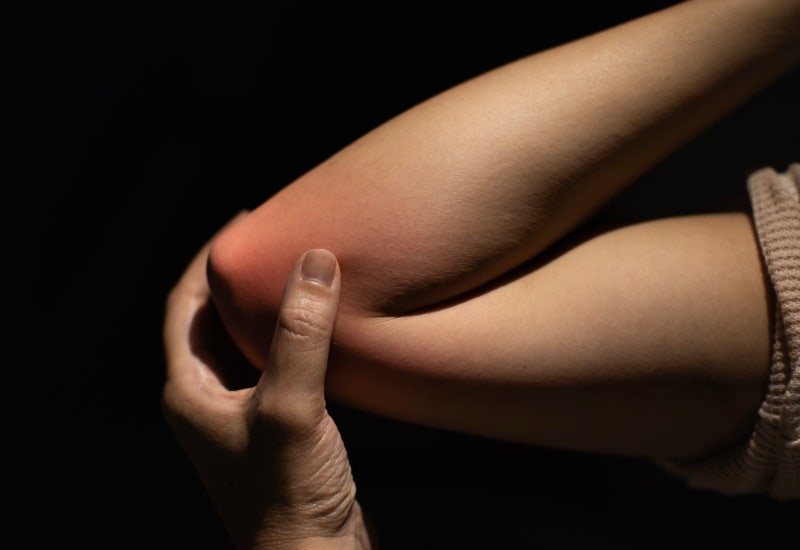
The thrill of watching a ball soar across the field is a great joy for those who enjoy golf and tennis.
With the recent increase in the population playing racket sports like golf and tennis, the number of patients visiting hospitals complaining of elbow pain is also rising.
In this article, we will look into the differences between Golf Elbow and Tennis Elbow, known as representative causes of elbow pain, and explore ways to prevent it.

Elbow pain may not be simple muscle soreness.
Elbow pain often feels like mild muscle soreness at first. Consequently, many people continue to exercise while enduring the pain by applying patches or resting briefly. However, in reality, it is often not simple muscle soreness but occurs as repeated micro-injuries accumulate in the elbow tendons. It commonly occurs during the following activities:
|
Medically, these conditions are called Epicondylitis. It is a condition where repeated overload is applied to the tendons attached to the epicondyle, the protruding part of the elbow bone, causing micro-tears and weakening the tendon tissue over time. If it occurs in the inner elbow tendon, it is called Golf Elbow (Medial Epicondylitis); if it occurs in the outer elbow tendon, it is called Tennis Elbow (Lateral Epicondylitis).
Furthermore, it is difficult to view the cause of elbow pain solely as a problem with the elbow joint. Our bodies move in a ‘Kinetic Chain’ structure where the wrist, elbow, shoulder, spine, and core muscles that support the torso are interconnected. For example, the burden can be concentrated on the elbow if there are problems such as:
|
In such cases, the force generated during a swing or racket movement can concentrate on the elbow, causing pain. Therefore, elbow pain may be a signal that the balance of body movement has collapsed rather than just localized pain. Instead of enduring the pain and continuing to exercise, it is important to accurately identify the cause and receive professional medical treatment if necessary.
Differences between Golf Elbow and Tennis Elbow
※ Golf Elbow (Medial Epicondylitis)
Golf Elbow is a condition where pain appears on the inside of the elbow. Micro-injuries occur as the wrist flexor muscle tendons, used when bending the wrist or gripping objects firmly, are used repeatedly. Especially in a golf swing, a large load can be applied to the inner elbow tendon when gripping the club tightly or using the wrist excessively at the moment of impact. Repeated stress leads to pain.
※ Tennis Elbow (Lateral Epicondylitis)
Tennis Elbow is a condition where pain appears on the outside of the elbow. Micro-injuries accumulate and tendon tissue weakens as the wrist extensor muscle tendons, which serve to straighten the wrist, are repeatedly strained. It commonly occurs not only in tennis racket swings but also in activities such as: using a computer mouse, using screwdrivers or tools, and repetitive wrist movements. According to domestic data, the number of patients with Tennis Elbow and Golf Elbow is steadily increasing, with approximately 660,000 people reported to have received treatment for related conditions as of 2021. This shows that excessive movements or incorrect swing patterns can cause elbow pain in the general public as well as athletes. Therefore, rather than simply distinguishing by the name of the disease, it is important to functionally evaluate which muscles and tendons are being subjected to repeated overload.
Table 1
Classification | Golf Elbow | Tennis Elbow |
Medical Name | Medial Epicondylitis | Lateral Epicondylitis |
Pain Location | Inner Elbow | Outer Elbow |
Main Cause | Overuse of wrist flexor muscles | Overuse of wrist extensor muscles |
Common Actions | Golf swing, gripping objects | Tennis swing, mouse usage |
How to Manage Elbow Pain

When elbow pain occurs, the most important thing is not to unconditionally stop exercising, but to accurately understand the cause of the pain and manage it appropriately. In the early stages, the following management can be helpful:
|
Particularly in golf or tennis, the habit of swinging using only arm strength can put a great burden on the elbow. Creating a stable swing mechanism using the lower body and core helps both in injury prevention and performance improvement. Additionally, it is important to strengthen the muscles around the shoulders and scapula along with the muscles around the elbow. Since the muscles around the shoulder and scapula play a role in dispersing force during the swing motion, securing sufficient strength can reduce the burden concentrated on the elbow tendons. Therefore, it is helpful to perform the following exercises for elbow pain management:
|
If elbow pain persists for more than two weeks or occurs repeatedly during exercise, it is necessary to consider the possibility of tendon damage rather than simple muscle soreness. In such cases, it is important to confirm the cause through an accurate diagnosis and receive appropriate treatment. The Chaum Neuromusculoskeletal Center identifies the cause of pain through ultrasound examinations and motor function evaluations, and then proceeds with treatment aimed at recovering the damaged area and restoring function through a customized rehabilitation program tailored to the patient’s condition.
Stretches to Prevent Elbow Injuries

One of the most important habits for preventing sports-related elbow injuries is stretching before and after exercise. Especially in sports with frequent repetitive wrist movements like golf or tennis, the flexibility of the forearm muscles plays a crucial role in reducing the burden on the elbow. Tennis Elbow and Golf Elbow are problems of the elbow joint itself, but they are closely related to the overuse of the forearm muscles that move the wrist. If actions like bending the wrist back or gripping objects tightly are repeated, the wrist extensor tendons of the forearm are continuously pulled at the lateral epicondyle of the elbow. Therefore, wrist mobility exercises and forearm muscle stretches are often performed together in the process of elbow pain prevention and rehabilitation. Simple mobility exercises that move the wrist smoothly can help reduce the micro-stress concentrated on the tendons.
Table 2
Stretch | Method | Effect |
Wrist Flexion Stretch | Extend arm forward and press the back of the hand with the opposite hand to bend the wrist | Relaxes forearm extensors |
Wrist Extension Stretch | Point palm downward and pull fingers back with the opposite hand | Relaxes forearm flexors |
Wrist Joint Circular Stretch | With arm extended, slowly rotate the wrist as if drawing small circles (10 times in each direction) | Relieves tension in wrist/forearm muscles, improves joint mobility |
Sufficient stretching before and after exercise and maintaining a proper swing posture are very important for preventing elbow injuries. For many who enjoy sports, the most important thing is to continue exercising for a long time without pain. If you understand elbow pain as a signal indicating an imbalance in the body rather than just simple fatigue or temporary pain and manage it appropriately, you will be able to continue golf and tennis more healthily and enjoyably.
- Reviewed by Professor Kim Dong-hyun, Department of Rehabilitation Medicine, Chaum Neuromusculoskeletal Center
Inquiries
Chaum Neuromusculoskeletal Center, Dept. of Rehabilitation Medicine: 02-3015-5005 | 3rd Floor, Chaum, 442 Dosan-daero (4-1 Cheongdam-dong), Gangnam-gu, Seoul

Frequently Asked Questions
What is the difference between golfer's elbow and tennis elbow?
The location of the pain and the causative muscles are different. Golfer's elbow occurs when there is strain on the inner tendon of the elbow, while tennis elbow results from damage to the outer tendon of the elbow. Overuse of the muscles that flex or extend the wrist is the main cause for each.
Can I continue exercising if I have elbow pain?
No, you should avoid strenuous exercise and rest. Initially, it is best to reduce repetitive wrist use and combine sufficient rest with ice packs. Continuing to exercise through the pain can worsen micro-tears in the tendons.
What exercises are good for preventing elbow pain?
Wrist mobility exercises and forearm muscle stretches are most effective. You can relieve muscle tension by stretching your wrist by flexing and extending it, or by making small circles with your wrist. Additionally, strengthening core and scapular muscles can reduce the burden on your elbows.
When should I see a doctor?
You should visit a hospital when the pain persists for more than 2 weeks or occurs repeatedly. It is likely tendon damage rather than simple muscle pain, so it is recommended to identify the exact cause through ultrasound examination and proceed with customized rehabilitation treatment.