2026-06-20
[Clinic of the Week] If you neglect straight neck or text neck, will it lead to a herniated disc? Fundamental treatment with precise examination at Chaum Musculoskeletal Clinic
Modern people often suffer from neck pain due to prolonged smartphone use or computer work. Neglecting conditions like straight neck or text neck can lead to serious issues like herniated discs. Chaum Musculoskeletal Clinic offers precise diagnosis and treatment to address the root causes and prevent recurrence.
![[Clinic of the Week] If you neglect straight neck or text neck, will it lead to a herniated disc? Fundamental treatment with precise examination at Chaum Musculoskeletal Clinic](/uploads/chaum_plc/224312817340/35ff63f513579ef4.jpg)
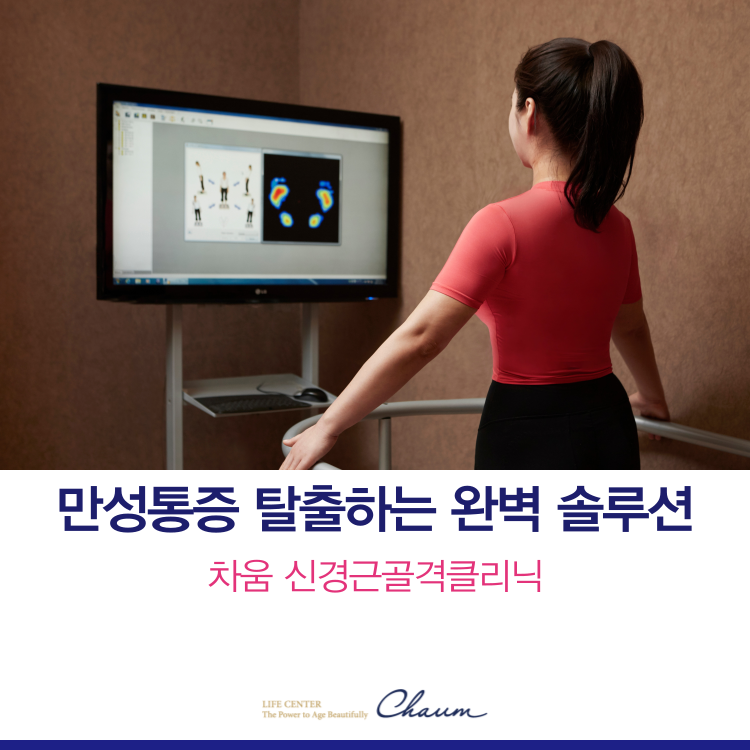
For modern people who spend long hours looking at smartphones or concentrating on monitors, neck pain has become an inseparable chronic ailment.
It’s easy to dismiss it as simply ‘my neck feels a bit stiff,’ but this could be a warning sign from our body.
A normal cervical spine should maintain a C-shaped curve, but prolonged poor posture can lead to a straight neck, where the neck straightens, or a text neck deformity, where the head protrudes forward beyond the shoulders. If these postural imbalances are not corrected in time and are left untreated, the discs between the vertebrae become compressed, eventually developing into a serious condition called a herniated disc.
The clinic we are introducing this week is Chaum Musculoskeletal Clinic, which identifies the causes of various pain conditions, including straight neck, text neck, and herniated discs, which threaten the lives of modern people, and prevents their recurrence.

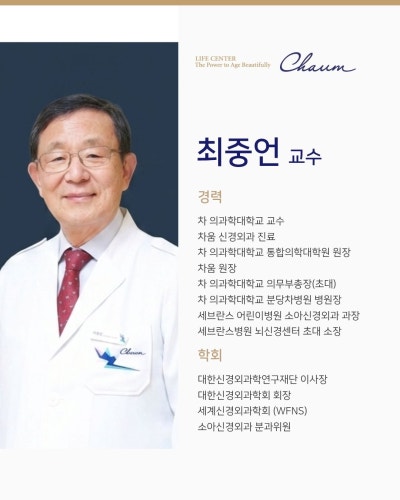
Introduction to Chaum Musculoskeletal Clinic Medical Staff
Professor Kim Dong-hyun
Experience
Clinical Assistant Professor, Assistant Professor, Associate Professor, Department of Rehabilitation Medicine, Hallym University Kangdong Sacred Heart Hospital
Assistant Professor, Department of Rehabilitation Medicine, Wonkwang University College of Medicine
Lecturer, Clinical Research Assistant Professor, Gangnam Severance Hospital, Yonsei University College of Medicine
Resident, Department of Rehabilitation Medicine, Gangnam Severance Hospital, Yonsei University College of Medicine
Intern, Gangnam Severance Hospital, Yonsei University College of Medicine
Academic Societies
Full Member, External Cooperation Committee Member, Korean Academy of Rehabilitation Medicine
Cooperation Director, Council Member, Korean Society of Cardiopulmonary Rehabilitation
Full Member, Korean Academy of Geriatric Rehabilitation Medicine
Professor Choi Joong-eon
Experience
Professor, CHA University
Neurosurgery Consultation, Chaum
Dean, Graduate School of Integrated Medicine, CHA University
Director, Chaum
First Vice President for Medical Affairs, CHA University
Hospital Director, Bundang CHA Hospital, CHA University
Head of Pediatric Neurosurgery, Severance Children's Hospital
First Director, Brain and Nerve Center, Severance Hospital
Academic Societies
Chairman, Korean Neurosurgical Research Foundation
President, Korean Neurosurgical Society
Pediatric Neurosurgery Subcommittee Member, World Federation of Neurosurgical Societies (WFNS)
Straight neck and text neck are functional problems that arise from an overall imbalance in the body, rather than issues with the bones themselves.
Chaum analyzes the patient's condition from multiple angles using advanced equipment to proactively identify risk factors that could develop into a herniated disc.
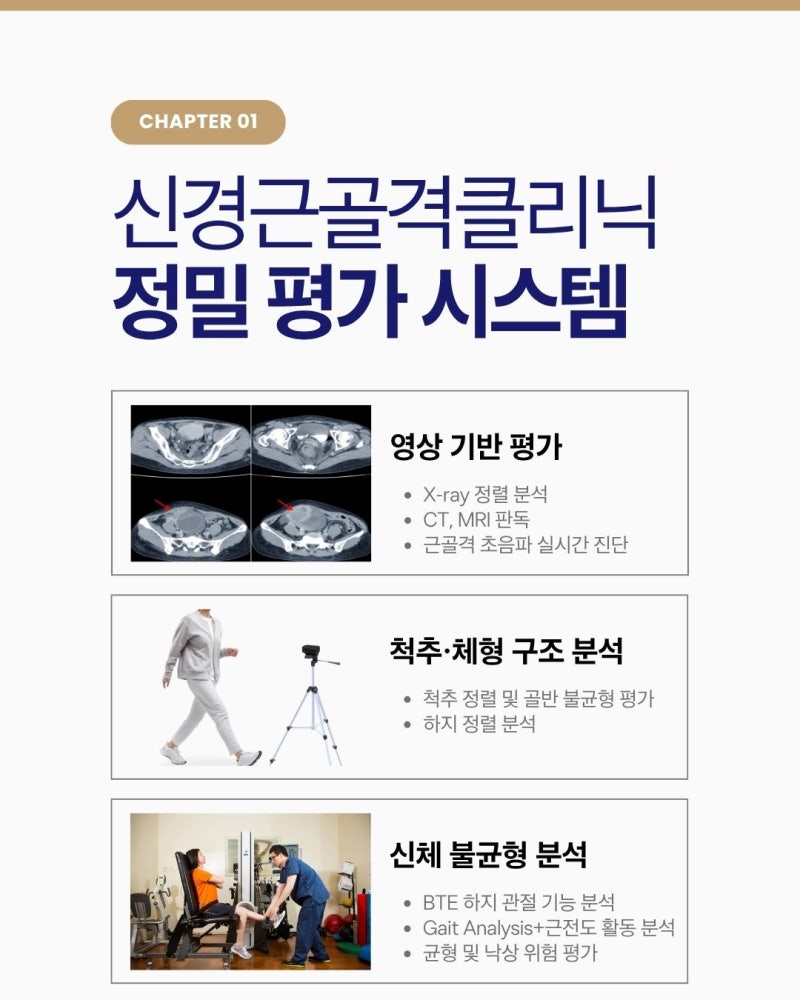
Musculoskeletal Clinic Precision Evaluation System
Image-based Evaluation
X-ray alignment analysis to confirm the progression stage of pain, accurate diagnosis through CT and MRI interpretation
Spine and Posture Structure Analysis
Spinal alignment and pelvic imbalance evaluation, lower limb alignment analysis (neck pain often originates from pelvic or lower body collapse)
Body Imbalance Analysis
BTE lower limb joint function analysis, Gait Analysis + electromyography activity analysis, balance and fall risk assessment
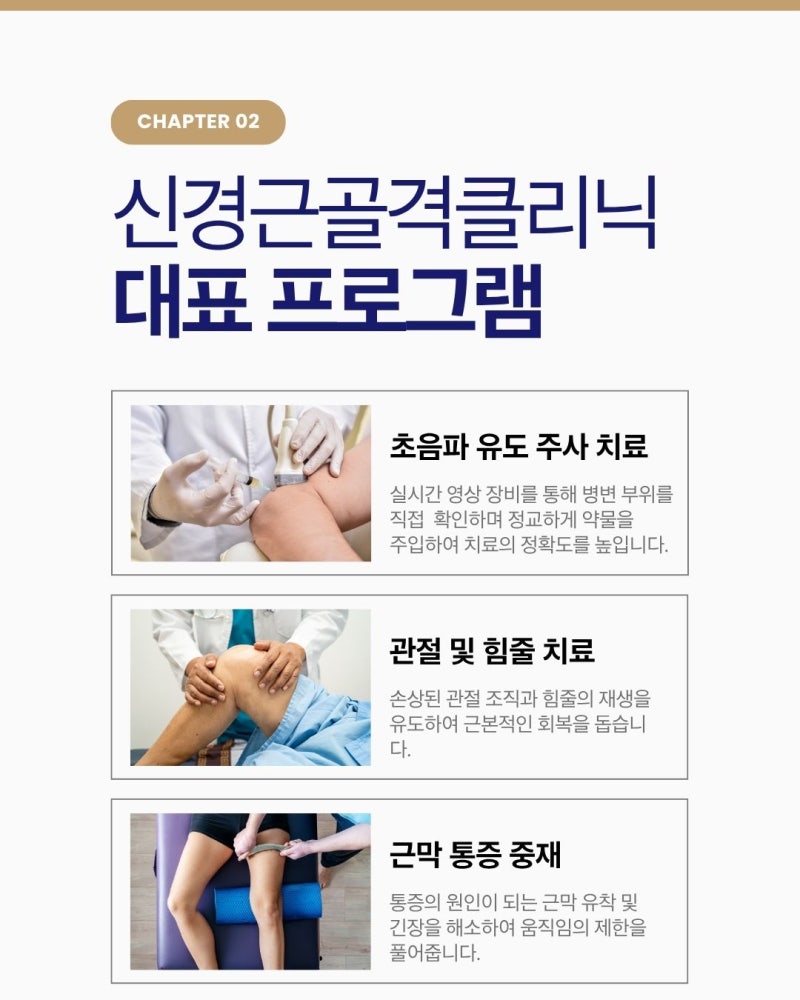
Chaum Musculoskeletal Clinic Signature Programs
Ultrasound-Guided Injection Therapy
Real-time imaging equipment is used to directly visualize the lesion area and precisely inject medication, enhancing treatment accuracy.
Joint and Tendon Treatment
Induces regeneration of damaged joint tissues and tendons to aid fundamental recovery.
Myofascial Pain Intervention
Resolves myofascial adhesions and tension that cause pain, releasing limitations in movement.
Introduction to Chaum Musculoskeletal Clinic Examinations
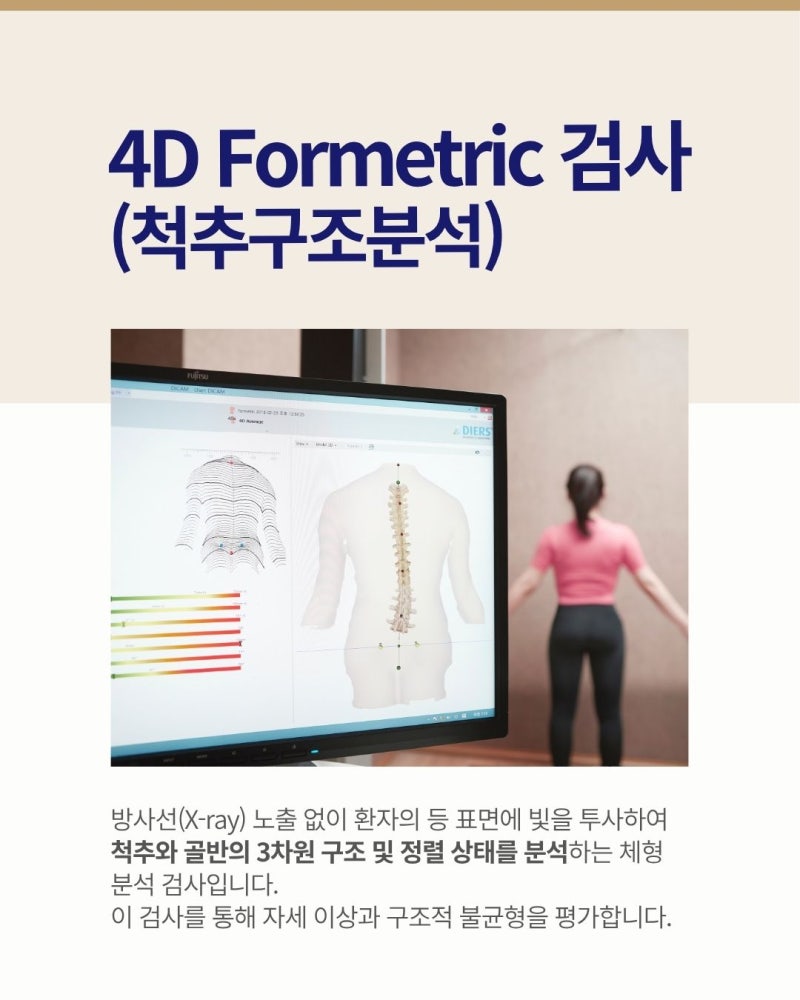
① 4D Formetric Examination
The 4D Formetric examination is an advanced 3D body shape analysis that projects light onto the patient's back surface without radiation (X-ray) exposure to analyze the 3D structure and alignment of the spine and pelvis.
1) Zero Radiation Exposure: Unlike X-rays, patients sensitive to radiation exposure, such as pregnant women, children, and adolescents, can safely undergo the examination without any worries.
2) Fast Examination Speed: Standing in front of the equipment completes the scan in a short time, approximately 6 seconds.
3) No Manual Marker Attachment: The equipment automatically recognizes key anatomical points of the human body without the need to manually attach stickers (markers) to the patient's body.
4) Detection of Subtle Deformities: It precisely detects spinal rotational deformities, pelvic torsion, and left-right tilt in 3D, which are difficult to confirm with simple 2D images.
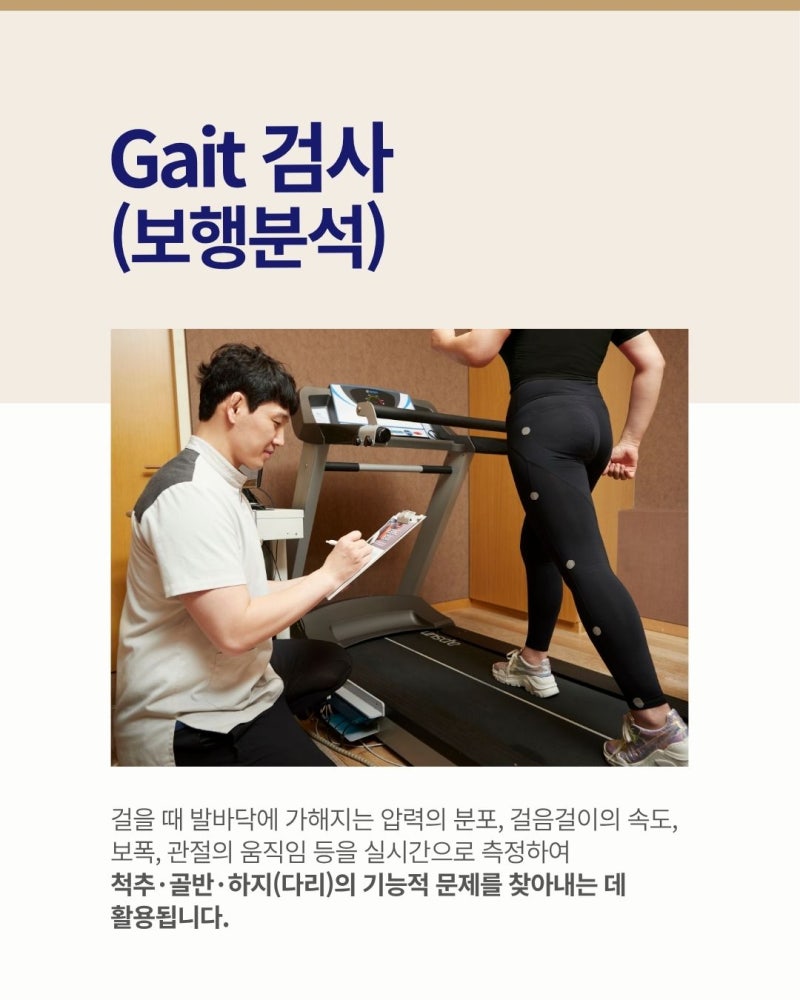
② Gait Examination (Gait Analysis)
It measures the distribution of pressure on the soles of the feet when walking, walking speed, stride length, and joint movements in real-time, and is used to identify functional problems in the spine, pelvis, and lower limbs (legs).
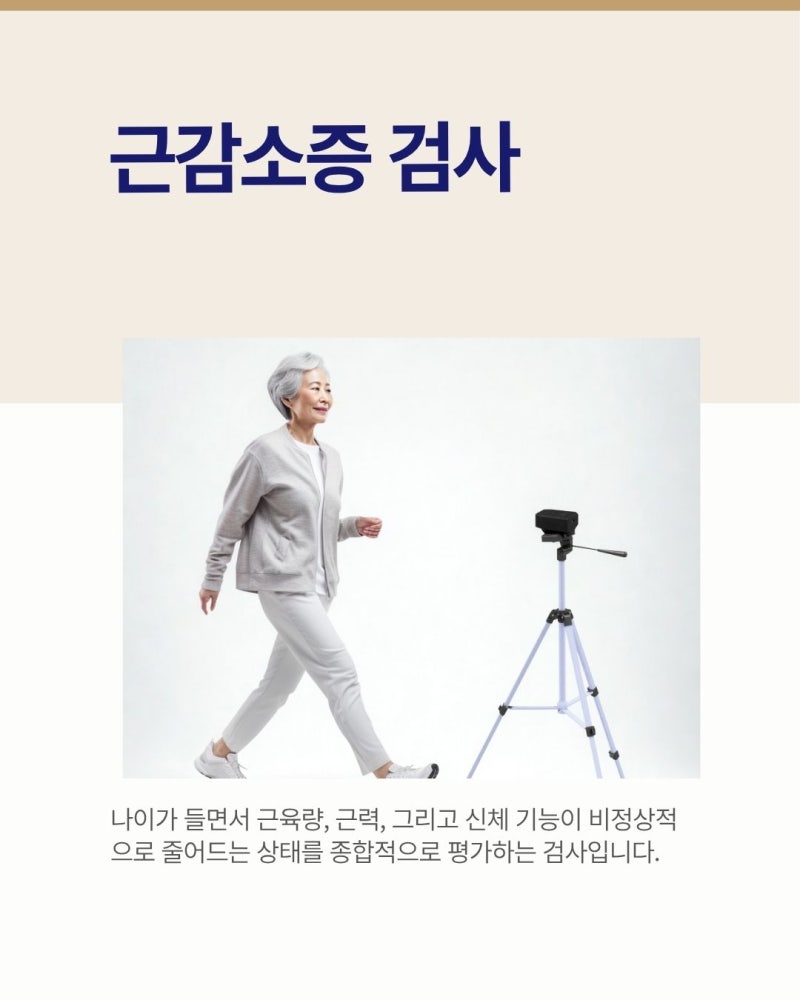
③ Sarcopenia Examination
This examination comprehensively assesses the state of abnormally decreased muscle mass, muscle strength, and physical function as one ages.
1. Muscle Strength Measurement (Grip Strength)
Measures grip strength using a dynamometer.
Diagnostic criteria: Muscle weakness is determined when grip strength is less than 28kg for men and less than 18kg for women.
2. Muscle Mass Measurement (Appendicular Muscle Mass)
Measures the amount of muscle mass in the arms and legs, excluding fat, from the entire body.
3. Physical Function Assessment (Walking Speed, etc.)
Assesses mobility to determine if muscles are performing their role in daily life.
Walking speed: Checks if walking speed slows to less than 1.0m per second during normal walking.
5-time chair stand: If it takes more than 12 seconds to stand up and sit down 5 times from a chair without using hands, physical function is considered impaired.
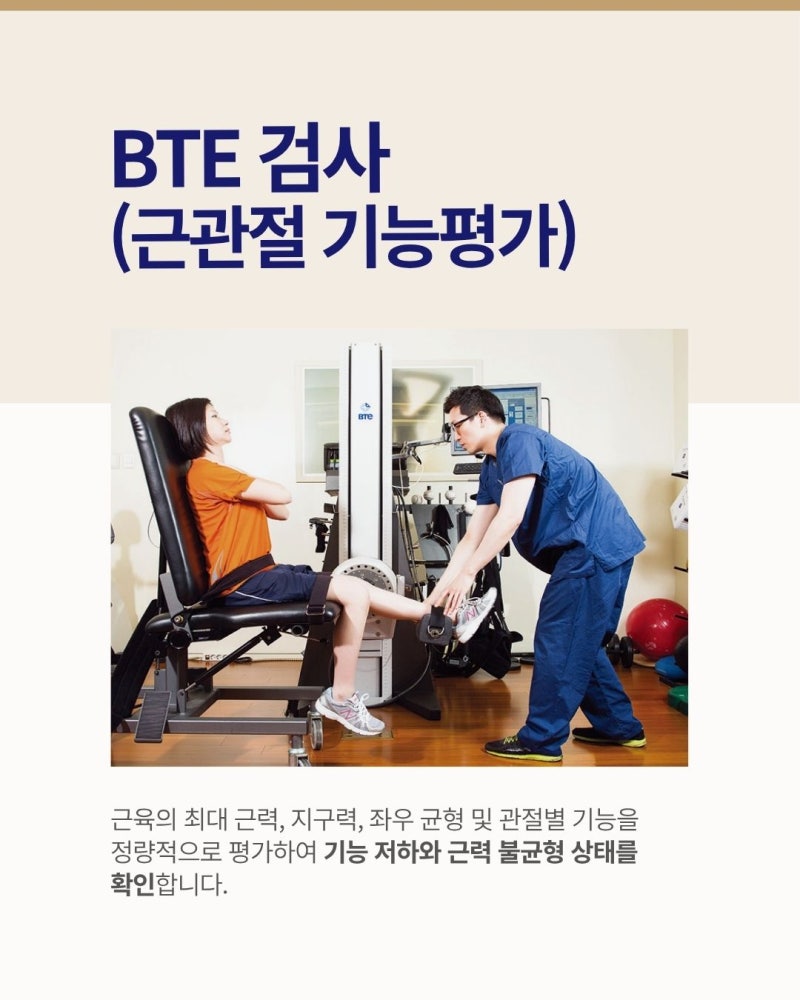
④ BTE Examination (Musculoskeletal Function Assessment)
This examination uses precision medical equipment from BTE (Baltimore Therapeutic Equipment) in the USA to scientifically measure and analyze the muscle strength, endurance, range of motion of major joints, and the ability to perform daily activities and specific tasks.
1) Multi-dimensional Contraction Measurement: All three ways muscles exert force—isokinetic (movement at a constant speed), isometric (holding force without length change), and isotonic (force to overcome constant resistance)—can be measured with one piece of equipment.
2) Realistic Task Simulation: Beyond simple pushing and pulling like a gym machine, it can simulate dozens of daily and occupational movements such as turning doorknobs, operating handles, lifting objects, and tightening screws by changing accessory tools.
3) Thorough Data Collection: Subtle tremors that occur when the patient exerts force, pain-inducing sections at specific angles, and left-right muscle strength imbalance (%) are recorded in real-time graphs and numerical values.

Treatment Process
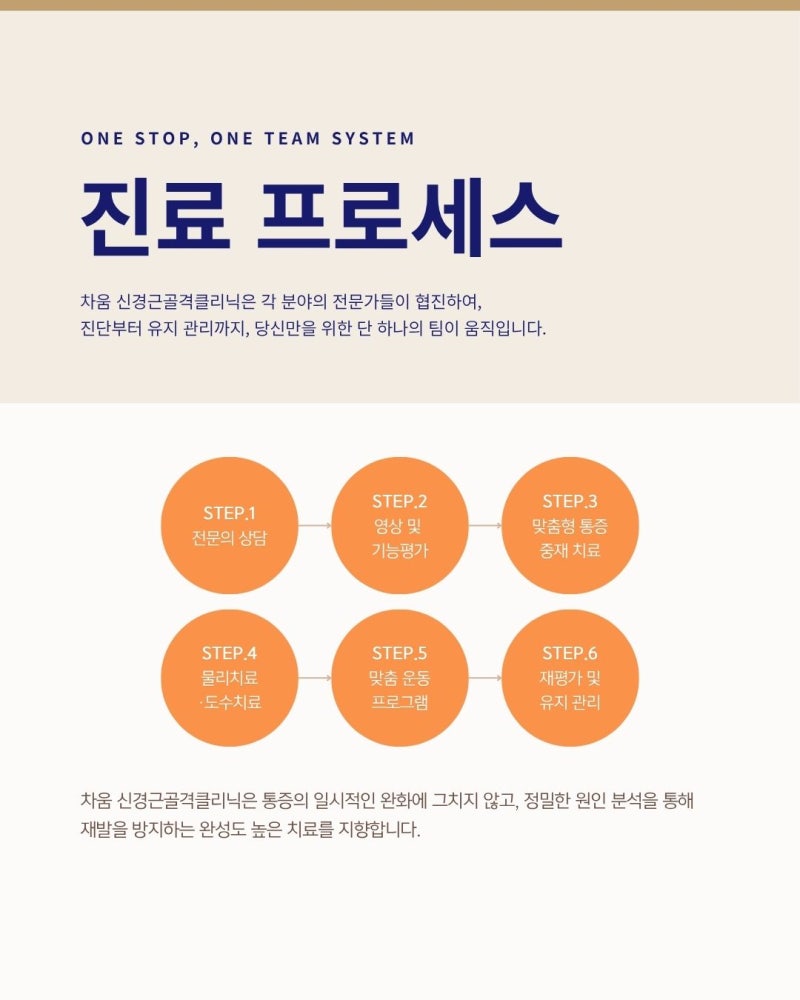
STEP 1. Specialist Consultation
‘In-depth analysis from pain history to lifestyle patterns’
The beginning of treatment is listening to the patient's voice. Through in-depth consultation with a specialist, we meticulously identify not only the intensity and location of the current pain but also daily habits, occupational environment, and past injury history.
STEP 2. Imaging and Functional Evaluation
‘Analysis of structural problems and movement using advanced equipment’
Based on the consultation, we scientifically analyze the internal body and movements that are not visible to the naked eye.
X-ray & Ultrasound Imaging Diagnosis: Precisely confirms the alignment of the skeletal structure and the condition of soft tissues such as ligaments and tendons.
Gait Analysis, etc.: Using advanced equipment, we comprehensively understand joint function, body balance, and structural problems when the patient walks or moves.
STEP 3. Customized Pain Intervention Therapy
‘Resolving the cause of pain to enable subsequent treatment’
Even if one wants to correct body alignment or exercise, severe pain can prevent proper treatment. In this stage, customized pain intervention therapy tailored to the individual's pain cause is performed under the accurate diagnosis of a specialist. By first resolving the root of inflammation and pain, the body is prepared to move safely and actively receive the next stage of rehabilitation therapy.
STEP 4. Physical Therapy · Manual Therapy
‘Restoring joint range of motion and correcting muscle imbalance’
Once the pain is controlled, it's time to awaken the function of the stiff body.
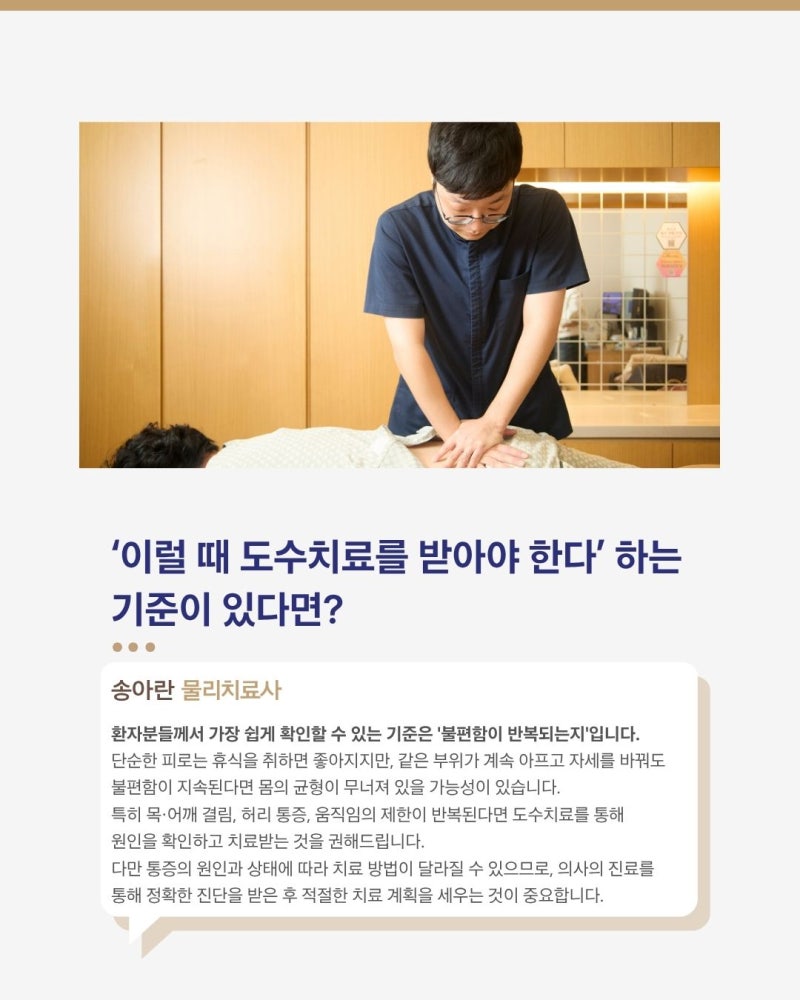
A skilled professional therapist is matched 1:1 to gently restore the range of motion of joints that were restricted due to pain.
Furthermore, muscle imbalances caused by poor posture are corrected, and overall body balance is healthily restored through specialized procedures.
STEP 5. Customized Exercise Program
‘Preventing recurrence with core stabilization and posture correction exercises’
To maintain a healthy, pain-free state even outside the treatment room, muscles must properly support the skeleton.
Chaum provides a ‘personalized exercise program’ tailored to the patient's individual health condition and preferred sports activities.
Through exercises that strengthen and stabilize weakened core muscles and posture correction exercises, a strong body that prevents pain from recurring is achieved.
STEP 6. Re-evaluation and Maintenance Management
‘Systematic management through pre/post-treatment data comparison’
Chaum's treatment does not end when you leave the hospital.
We objectively compare pre- and post-treatment examination data to visually confirm with the patient how much the body has recovered. We provide continuous and systematic aftercare and prevention guides to help you maintain a healthy life for a long time in your daily life.
Curious for more health information?
https://blog.naver.com/chaum_plc/223941400842?
https://blog.naver.com/chaum_plc/224212275964?trackingCode=blog_bloghome_searchlist
✅Chaum offers real-time online reservation services for your convenience.
This reservation service can be easily used after registering as a member on the Chaum website.

Frequently Asked Questions
Is there no risk of radiation exposure with the 4D Formetric examination?
No, there is absolutely no risk of radiation (X-ray) exposure. This method analyzes the 3D structure of the spine and pelvis by projecting light onto the patient's back surface, so pregnant women, children, and adolescents can safely undergo the examination with peace of mind.
What are the criteria for determining muscle weakness in sarcopenia testing?
Based on measurements using a dynamometer, muscle weakness is diagnosed when men measure less than 28kg and women less than 18kg. Along with this, sarcopenia is assessed by comprehensively evaluating body function, including limb muscle mass measurement and walking speed.
Is rehabilitation exercise possible immediately even with severe pain?
No, if there is severe pain, personalized pain intervention treatment must be performed first. After resolving the root of inflammation and pain with ultrasound-guided injections, a state where the body can move safely is created before performing physical therapy and customized exercise programs.
What is special about the BTE musculoskeletal function evaluation test?
Its unique feature is that it can measure by directly simulating daily life and occupational movements. It performs dozens of movements such as turning doorknobs or lifting objects, and records and analyzes subtle tremors or left-right muscle imbalances with real-time data.
Is the cause of neck pain only in the neck bones themselves?
No. Straight neck and text neck are functional problems that occur when the overall body balance collapses, rather than problems with the bones themselves. In fact, the cause of neck pain often comes from pelvic or lower body collapse, so an overall body shape structure analysis is necessary.