2026-06-03
Recurring Lip Blisters? Understanding the Causes of Cold Sores
Discover why cold sores, or oral herpes, frequently appear, especially in winter. Learn about the HSV-1 virus, its triggers like weakened immunity, stress, and lack of sleep, and effective prevention strategies.
During the harsh winter months, with their rapid drop in temperature and dry air, the body's immune system can easily become compromised. Many people experience symptoms such as itching, tingling, and small blisters around their lips during this period. This often happens when a dormant virus in the body reactivates, taking advantage of a weakened immune system. Today, we will explore why cold sores, an unwelcome winter guest, appear and how to prevent them in daily life.

Cold sores, or oral herpes: Why do they appear?
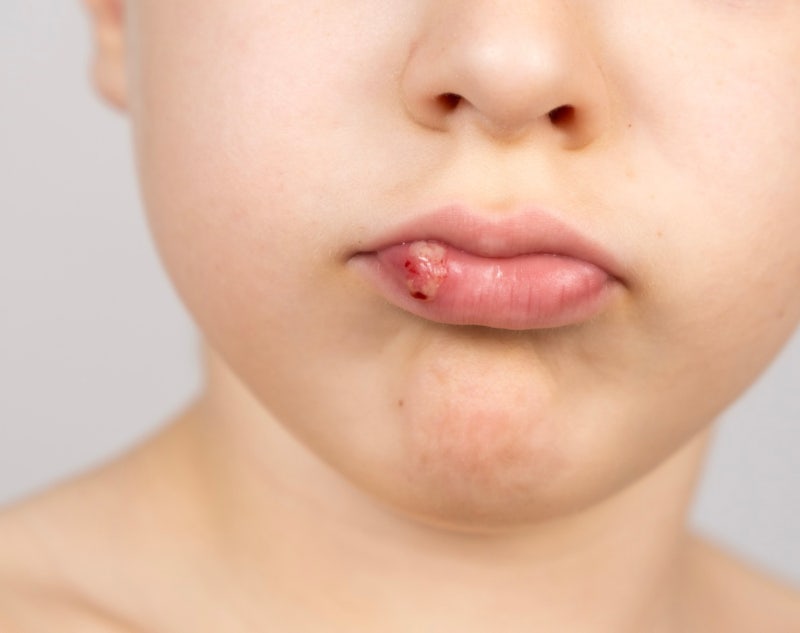
Lip blisters can arise from various causes, but the most common type observed clinically is oral herpes, or cold sores. Cold sores are caused by the herpes simplex virus type 1 (HSV-1), known as one of the most common viral infections in humans. According to the Korea Disease Control and Prevention Agency, this virus, after its initial infection, forms blisters inside or around the lips. Even after the symptoms disappear, the virus is not completely eliminated and remains dormant in the body. The virus then hides in a cluster of nerve cells called the trigeminal ganglion, maintaining an inactive state in DNA form. These dormant viruses reactivate when the immune system is temporarily weakened. Especially when the body's balance is disrupted due to factors like a sudden drop in temperature during winter, stress from excessive work, lack of sleep, or UV exposure, the virus travels along the nerves to the skin, causing an inflammatory reaction and the appearance of the common lip blisters. According to data from the Korean Dermatological Association, approximately 60-90% of the adult population has experienced HSV-1 infection, making it a very common virus. However, the actual frequency and intensity of symptom recurrence vary greatly depending on an individual's immune status.
Category | Cold Sore Characteristics |
Dormancy Mechanism | Dormant in the trigeminal ganglion, reactivates via retrograde neural transport when immunity is low |
Contagion | Transmissible through saliva not only during blister formation but also during asymptomatic periods |
Winter Risk Factors | Blood vessel constriction due to low temperatures, weakened physical barrier from mucosal dryness |
Recurrence Triggers | Stress, lack of sleep, accumulated fatigue, UV exposure, sudden body temperature changes |
Cold sores: Picking them can lead to secondary infection
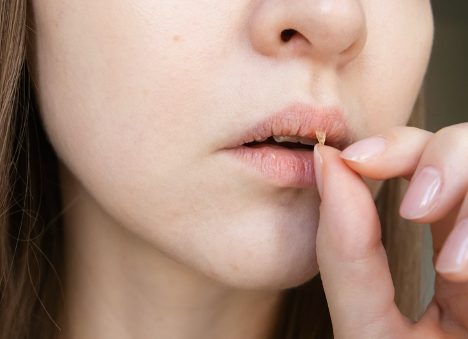
Cold sores typically progress through four stages. The first is the prodromal stage, where there are no visible blisters yet, but a burning, itching, or tingling sensation appears around the lips. Using antiviral medication quickly at this stage can help shorten the overall treatment duration. In the second, blister stage, small, millet-like blisters appear in clusters. In the third, erosion (ulcer) stage, the blisters burst, oozing fluid, and the skin becomes raw. This stage requires the most caution. Touching the affected area with hands can transfer the virus to fingers or eyes, potentially causing ocular herpes. If a secondary bacterial infection, such as by Staphylococcus aureus, occurs, the risk of scarring increases. Subsequently, in the healing stage, scabs form and gradually heal. Forcibly removing these scabs can also delay healing and lead to hyperpigmentation or scarring, so it should be avoided. It is important to note that cold sores may not always be confined to the lips. In rare cases of severely weakened immunity, there is a reported possibility of progression to meningitis or encephalitis. Furthermore, if a patient with atopic dermatitis contracts cold sores and it becomes severe, it can worsen into a serious complication called eczema herpeticum, requiring even more meticulous management.
Characteristics and Recommended Actions for Each Stage of Cold Sore Progression
Stage | Onset Time | Key Characteristics | Recommended Action |
Stage 1: Prodromal | 1-2 days before eruption | Burning, itching, tingling | Immediately start antiviral medication (ointment or oral) |
Stage 2: Blister | 2-3 days after eruption | Small blisters form in clusters | Do not burst blisters, maintain cleanliness, minimize contact |
Stage 3: Erosion | 4-6 days after eruption | Blister rupture, oozing fluid, ulcer formation | Focus on preventing secondary infection, use antibiotic ointment if necessary |
Stage 4: Healing | 7-10 days after eruption | Scab formation, natural healing | Do not forcibly remove scabs, maintain moisture |
The key to preventing recurrence: Immune management

The fundamental reason for recurring cold sores is not the virus itself, but rather an immune state that cannot suppress it. Once infected, the herpes simplex virus (HSV-1) never completely leaves the body and remains dormant in the nerve ganglia. Therefore, whether it recurs depends on how stably the immune system is maintained, rather than the mere presence of the virus. In particular, the impaired function of T cells and NK cells (natural killer cells), which regulate viral infections, is known to be closely related to the recurrence of viral infections like cold sores. Chronic fatigue, lack of sleep, stress, and nutritional imbalance reduce the activity of these immune cells, creating an environment where dormant viruses can reactivate. In winter, factors such as vitamin D deficiency due to reduced sunlight, increased indoor activities, and dry environments combine to make immune balance even more susceptible to disruption.
1. KAIST. (2022, June 8). New immune T cell discovered that breaks existing concepts [News]. Korea Advanced Institute of Science and Technology. https://zrr.kr/qByQOh
Therefore, to prevent cold sores, it is crucial not only to rely on medication when symptoms appear but also to maintain a stable immune system through lifestyle management and systematic health check-ups. Sufficient sleep, regular meals, a balanced intake of protein, vitamins, and minerals, and stress management are all practical factors that help suppress viral reactivation. The importance of such immune management is increasingly emphasized in current medical practice, and some medical institutions are implementing prevention-oriented care that evaluates immune status and manages individual vulnerabilities through a functional medicine approach. Chaum Power Aging Clinic is also known as a medical institution that provides prevention-based treatment centered on immune management, assisting patients with recurrent cold sores or chronic fatigue by checking their immune status and managing their overall lifestyle, including diet and nutrition.
Recurring lip blisters may not just be a skin problem but a warning signal from our body's immune system. If frequent recurrences continue, examining your body's resilience and defense system, rather than just focusing on the symptoms, becomes the most realistic starting point for preventing cold sores. We hope you have a healthy and warm winter by managing your immunity.
Reference: Korea Disease Control and Prevention Agency
https://health.kdca.go.kr/healthinfo/biz/health/ntcnInfo/healthSourc/thtimtCntnts/thtimtCntntsView.do?thtimt_cntnts_sn=64
Inquiries
Life Center Chaum 02-3015-5300 | 4-1 Cheongdam-dong, Gangnam-gu, Seoul

Frequently Asked Questions
Why do I get cold sores (herpes labialis)?
The main causes are infection with herpes simplex virus type 1 (HSV-1) and a weakened immune system. Once infected, the virus lies dormant in the body's nerve ganglia and reactivates when the body's immunity drops due to fatigue, stress, lack of sleep, etc., causing blisters around the lips.
Are there any symptoms that can tell me in advance before cold sores appear?
Yes, 1-2 days before the blisters appear, you may feel a burning, itching, or tingling sensation around your lips. This is called the prodromal stage, and if antiviral ointments or medications are used immediately during this period, the overall treatment period can be significantly shortened.
Can I pop cold sore blisters?
No, you should never pop them. Popping or touching the blisters with your hands can spread the virus to other areas and increase the risk of secondary bacterial infection, which can lead to scarring. The blister area should be kept clean and contact minimized.
Can I remove the scabs that form when cold sores are healing?
No, you should not forcibly remove scabs. Forcibly removing scabs formed during the recovery period can delay wound healing and lead to hyperpigmentation or scarring. It is best to keep the area moisturized and wait for them to fall off naturally.
How can I prevent frequent recurrence of cold sores?
The most important thing is consistent immune system management. Cold sores recur when the immune system is weakened, so the fundamental preventive measure is to suppress viral reactivation by increasing the activity of immune cells through adequate sleep, regular meals, and stress management.