2026-06-03
2026 Monthly Health Care Calendar
A comprehensive guide to monthly health issues and prevention tips for 2026, the Year of the Red Horse, covering respiratory care, vaccinations, and seasonal wellness.
2026, the Year of Byeong-o (the Year of the Red Horse), has dawned. Like a horse filled with the energy of fire, it is a year where vitality moves vibrantly, but it is also a time when our bodies require balance and careful management. In this article, we will explore the health issues to watch out for each month and their prevention methods so that you can spend 2026 in a healthier way.
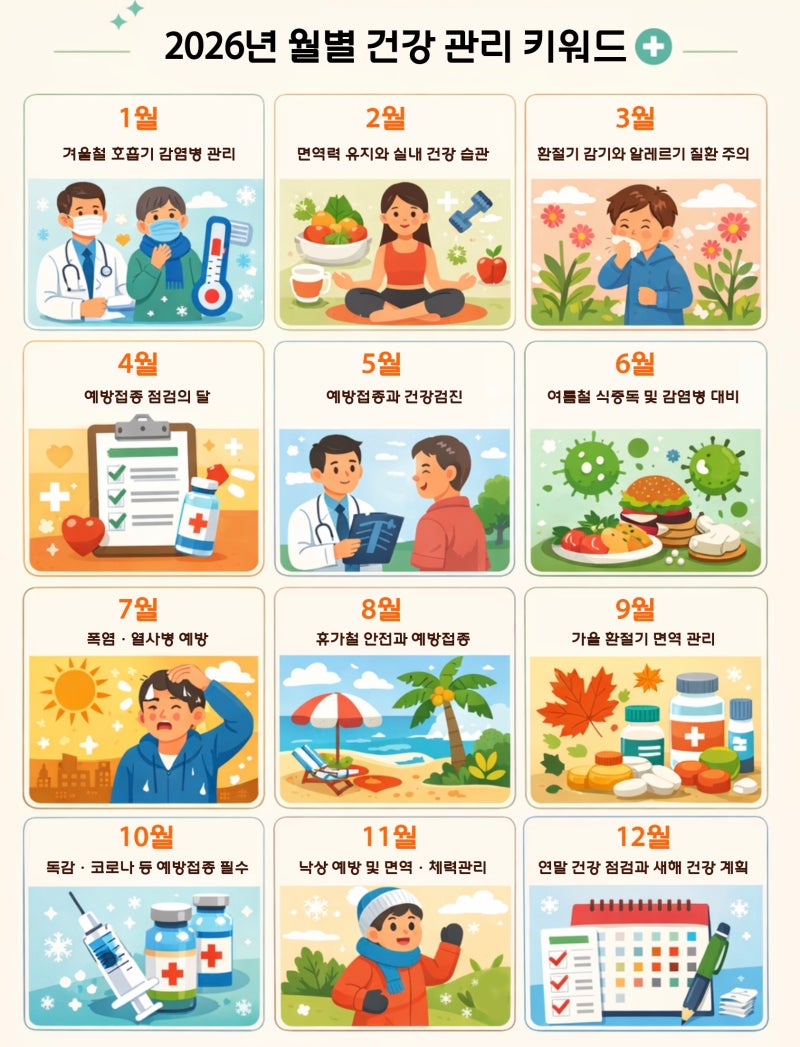
January: Managing Winter Respiratory Infectious Diseases
January is the peak season for respiratory viral infections such as influenza (flu), COVID-19, and RSV. According to the Korea Disease Control and Prevention Agency (KDCA) infectious disease surveillance trends, low temperatures and crowded indoor environments act as factors that significantly increase the risk of droplet and contact transmission. In particular, the elderly, those with chronic diseases, and pregnant women are at higher risk for complications such as pneumonia and respiratory failure, requiring special care. Managing respiratory infections during this period is crucial because they are highly likely to lead to hospitalization beyond simple infection. It is important to double-check your vaccination status for the flu and COVID-19 and make handwashing, wearing masks, and indoor ventilation a part of your daily life. If coughing, difficulty breathing, or high fever persists, early consultation with a specialist is recommended.
Prevention in Daily Life · Practice cough etiquette by covering your mouth and nose with your sleeve when coughing or sneezing. · Wash hands with soap for at least 30 seconds (after going out, before/after meals, after using the restroom). · Ventilate indoors frequently (recommended for 5–10 minutes every 30 minutes). · Wear a mask and consult a medical institution if respiratory symptoms occur. |
February: Maintaining Immunity and Indoor Health Habits
February is a time when immune function is easily weakened due to a combination of decreased activity from the cold and a lack of sunlight. Prolonged indoor living can lead to disrupted sleep rhythms, feelings of depression, and loss of muscle strength. Health management is vital during this period because a weakened immune state is likely to lead directly to seasonal illnesses in March. Maintaining a regular wake-up time, managing appropriate indoor humidity (40–60%), and performing light indoor stretching and strength exercises will help maintain basic physical strength.
Prevention in Daily Life · Maintain a lifestyle rhythm by waking up and sleeping at consistent times daily. · Protect respiratory mucous membranes by maintaining indoor humidity at 40–60%. · Improve basic physical strength with light indoor exercises (stretching, strength training). · Supplement immunity with regular meals and Vitamin D intake (sunlight exposure). |
March: Beware of Seasonal Colds and Allergic Diseases
March is a time when colds, allergic rhinitis, and conjunctivitis increase simultaneously due to large daily temperature fluctuations. Immune imbalances during the change of seasons can exacerbate both infectious and allergic diseases. Caution is especially needed in March, the start of spring, because it is easy to miss the treatment window by mistaking early symptoms for a simple cold. If sneezing, nasal congestion, and itchy eyes recur, an accurate diagnosis is necessary to distinguish between infectious and allergic diseases.
Prevention in Daily Life · Always wash hands and brush teeth after returning home. · Refrain from going out on days with high pollen or dust, and wear a mask. · Ventilate indoor air frequently. · Consult ENT or allergy specialists if allergic symptoms are severe. · Early response is crucial for both infections and allergies. |
April: Vaccination Check-up Month
April is the most appropriate time to review your annual vaccination schedule. Adults may also require booster shots depending on age, underlying conditions, and occupation. Prevention in April is very important as it serves as a preparation period to secure immunity before the summer infectious disease season. We recommend checking your vaccination history and planning any missing shots through consultation with medical staff.
Prevention in Daily Life · Check your personalized vaccination history based on age and underlying conditions on the Vaccination Helper website. · Check for potential adverse reactions through medical consultation before vaccination. · Wait for 15–30 minutes after vaccination to observe any abnormal symptoms. · Listen carefully to instructions regarding precautions before and after vaccination when visiting the hospital. |
May: Vaccinations and Health Check-ups
May is a time when daily activities become more vibrant and interest in health increases with the changing season. At this time, regular health check-ups and reviewing adult vaccination records are important starting points for health management. Even if you feel fine, checking key health indicators such as blood pressure, blood sugar, and cholesterol through regular check-ups helps in the early detection of chronic diseases and prevention of complications. The National Health Insurance Service and the National Health Information Portal state that such regular check-ups have a positive impact on disease management and reducing medical costs. Adult vaccinations are also an element to be checked. Certain vaccines, such as those for pneumococcus and shingles, are recommended for adults, and ensuring no doses are missed helps reduce the risk of infection. This month, checking both health check-up results and vaccination history serves as the starting point for long-term health management.
Prevention in Daily Life · Check eligibility for national health check-ups and receive regular screenings. · Monitor key health indicators such as blood pressure, blood sugar, and lipid levels. · Review adult vaccination history and supplement missing vaccines. · Consult for additional tests based on family history. |
June: Preparing for Summer Food Poisoning and Infectious Diseases
From June, when both temperature and humidity rise, the occurrence of food poisoning, enteritis, and waterborne/foodborne infectious diseases gradually increases. According to the KDCA, a significant portion of summer food poisoning occurs not only from dining out but also from poor hygiene management during home cooking and storage. June, before the full-scale heatwave begins, is the most appropriate time to pre-check food storage conditions, cooking environments, and hand hygiene habits. Simply managing daily hygiene can significantly lower the risk of food poisoning and intestinal infections, making it a meaningful preparation stage for summer health care.
Prevention in Daily Life · Thoroughly practice handwashing before/after cooking and after going out. · Maintain refrigeration (0–5°C) and freezing (–18°C or lower) temperatures and check expiration dates. · Store raw foods like meat and seafood separately from cooked foods. · Consume vegetables and fruits after thorough washing; be cautious with uncooked foods. · Avoid storing leftovers at room temperature for long periods. |
July: Preventing Heatwaves and Heatstroke
July is a time when heatwaves intensify, and the risk of heatstroke, dehydration, and cardiovascular strain increases sharply. Heatwaves are classified not just as an inconvenience but as a disaster that directly affects health; the elderly, those with chronic diseases, and those with high outdoor activity levels are advised to take extra care. It is important for preventing health issues caused by heatwaves to consume plenty of fluids even before feeling thirsty, reduce outdoor activities during midday, and maintain appropriate indoor temperatures. Not dismissing early symptoms lightly is also a key element of summer health care.
Prevention in Daily Life · Drink water frequently before body temperature rises. · Minimize midday outings and rest in the shade. · Choose well-ventilated clothing. · Rest and hydrate immediately if symptoms like dizziness or vomiting occur. · Be cautious of excessive temperature differences when using indoor air conditioning. |
August: Vacation Safety and Vaccinations
August is the summer vacation season when travel and outdoor activities are concentrated, simultaneously increasing the risk of exposure to infectious diseases and safety accidents. We recommend checking infectious disease information for your destination before traveling and reviewing whether necessary vaccinations are up to date. Staying in different environments, consuming different foods, and engaging in water activities can lead to unexpected health problems, so it is important to monitor your health status before and after travel. In particular, symptoms such as fever, diarrhea, and skin infections should be carefully observed even after the trip. While vacation is a time for recovery, travel without preparation can lead to a health burden.
Prevention in Daily Life · Check infectious disease information for the destination before traveling. · Review vaccination history and consult in advance if necessary. · Use sunscreen and take sufficient rest during outdoor activities. · Immediately wash and disinfect any wounds or blisters. · Visit a hospital if fever, diarrhea, or respiratory symptoms persist after travel. |
September: Autumn Seasonal Immunity Management
September is a time when respiratory diseases increase again as the temperature difference between morning and evening grows. This period is seen as a time to reset immunity management because it is crucial to maintain a stable immune state before the upcoming flu season. Regular lifestyle habits and balanced nutritional intake are the basics of preventing infections during the change of seasons.
Prevention in Daily Life · Maintain regular meals and nutritional balance. · Keep warm to prepare for morning and evening temperature fluctuations. · Make indoor ventilation and handwashing a daily routine. · Seek early treatment if cold symptoms appear. |
October: Essential Vaccinations for Flu, COVID-19, etc.
The KDCA identifies October as the optimal time for influenza vaccination. Since it takes about two weeks for antibodies to form after vaccination, getting vaccinated before the outbreak is most effective. Those in high-risk groups must check their vaccination status and proceed with vaccination after consulting with medical staff. Additionally, as it is a time when the risk of infectious diseases like the flu and colds increases due to the cold, it is an important month to maintain immunity and follow daily hygiene rules.
Prevention in Daily Life · Essential vaccination before the outbreak. · Make handwashing and wearing masks a daily routine. · Refrain from staying in crowded places for long periods. · High-risk groups should get vaccinated after medical consultation. |
November: Fall Prevention and Immunity/Physical Strength Management
November is the final preparation period before the full onset of winter. The Ministry of Health and Welfare explains that a decrease in activity during winter can lead to sarcopenia and weakened immunity. It is important to prepare for winter through light strength exercises and a regular lifestyle. Furthermore, fall accidents occur frequently due to slippery winter roads; as it is a time when cold-related illnesses and acute diseases occur, attention to warmth and safety is necessary.
Prevention in Daily Life · Consistently perform strength exercises (2–3 times a week). · Keep the body warm. · Practice daily rules to prevent seasonal colds. · Safety measures to prevent slips and falls. |
December: Year-end Health Review and New Year Health Planning
This is a time to calmly organize the results of health check-ups and vaccination records from the year and reflect on any changes in figures or missed items. Even if there are no symptoms, looking back at lifestyle habits, weight changes, sleep status, and stress levels becomes an important starting point for the next year’s health management. Simply organizing individual health goals, regular check-up schedules, vaccination plans, and lifestyle improvement goals based on past records during this period makes New Year’s health management much easier. A year-end review is the most realistic health investment for the following year.
Prevention in Daily Life · Collect medical and check-up records from the year. · Re-verify vaccination history. · Establish a checklist plan for the next year. · Manage health through professional health consultations. |
Health is not achieved by taking care of it only in a certain month or at a certain time. Knowing and preparing for the signals our bodies send according to the season and environment is the wisest start to health management. In 2026, why not develop a habit of checking your body’s condition once a month, just as you check a calendar? In the Year of the Red Horse, we hope you listen to your body’s rhythm and create a healthy daily life rather than just racing ahead. Repetition of small care eventually becomes the greatest health asset. We wish you health and peace in the new year of 2026. Happy New Year!
References
* KDCA Infectious Disease Portal: [https://dportal.kdca.go.kr](https://dportal.kdca.go.kr)
* KDCA Vaccination Helper: [https://nip.kdca.go.kr](https://nip.kdca.go.kr)
* KDCA National Immunization Program: [https://www.kdca.go.kr](https://www.kdca.go.kr)
* Ministry of Health and Welfare Official Website: [https://www.mohw.go.kr](https://www.mohw.go.kr)
* National Health Insurance Service Health Information: [https://www.nhis.or.kr](https://www.nhis.or.kr)
Inquiries
Life Center Chaum 02-3015-5300 | 2F/3F, 4-1 Cheongdam-dong, Gangnam-gu, Seoul
