2026-06-03
Why Coughs Linger in Winter
Learn why coughs persist after a cold in winter, how to distinguish between post-viral coughs and other conditions, and effective ways to manage symptoms at home.
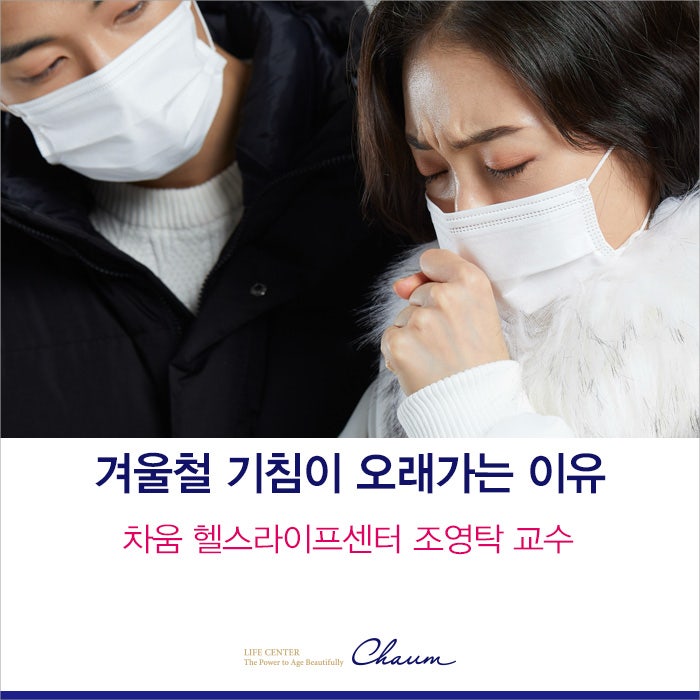
One of the most frequent questions heard in the examination room during winter is, ‘I think my cold is gone, but the cough just won’t stop.’
In fact, many people experience acute symptoms like fever, runny nose, and sore throat improving within a few days, yet the cough persists for weeks or even months. Consequently, it is not uncommon for patients to worry, ‘Could something be wrong with my lungs?’ or ‘Is this a sign of a serious illness?’
In this article, we will explore why coughs linger during the winter and look at management methods that can help in daily life.
Other symptoms have improved, so why is only the cough lingering?
Viral infections such as the common cold or flu cause inflammation in the mucous membranes of the nose, throat, and bronchial tubes, damaging the protective function of the mucosal surface. Even when symptoms like fever or a runny nose seem to have subsided, microscopic inflammation and irritation often remain inside the airway mucosa. A cough occurring during this period is called a ‘post-viral cough,’ a common phenomenon where coughing can persist for 3 to 8 weeks after a cold. Particularly in winter, indoor heating often causes humidity to drop below 30%.
A dry environment dries out the airway mucosa and impairs the function of the cilia, which move foreign substances out of the body. This makes the neural circuits that control coughing sensitive, causing cough receptors to overreact to even minor stimuli 1). In other words, the reason the cough continues while other cold symptoms have vanished is that the airways are being repeatedly irritated by the winter environment before they have fully recovered. While most post-viral coughs improve naturally over time, it is important to distinguish whether persistent or worsening symptoms are part of a simple recovery process or a signal of another condition.
1) Health Kyunghyang, ‘The reason coughs linger after a cold... the influence of airway hyperresponsiveness is significant,’ https://zrr.kr/FnJbib
How to Distinguish Coughs by Cause (Post-viral Cough vs. Other Conditions)
If a cough persists for more than 3 weeks after a cold, it is necessary to consider whether it is a simple lingering cough or an underlying condition causing it. Representative causes include post-viral cough, post-nasal drip (Upper Airway Cough Syndrome), asthma, and gastroesophageal reflux disease (GERD). Since the treatment approach for each of these four is different, it is important to distinguish them through the pattern of the cough and accompanying symptoms.
・ Post-viral Cough: A cough that occurs because the airways remain hypersensitive after a cold, flu, or COVID-19. It can usually last 3 to 8 weeks, and chest X-rays or basic tests often show no abnormalities. It is characterized by being triggered by cold air, speaking, or laughing, and gradually improving over time. In this case, lifestyle management to reduce airway irritation and short-term medication if necessary are helpful.
・ Post-nasal Drip (Upper Airway Cough Syndrome): A condition where secretions from the nose or sinuses flow down the back of the throat, triggering a cough. Patients often describe it as a ‘phlegmy feeling’ or ‘something constantly draining down the throat,’ and it is characterized by severe coughing in the morning or frequent throat clearing. It is often accompanied by allergic rhinitis or chronic sinusitis; in these cases, treating the rhinitis or sinusitis is more effective for cough relief than standard cough medicine.
・ Cough-Variant Asthma: While asthma is commonly known for shortness of breath and wheezing, ‘cough-variant asthma,’ where only a cough persists, is common in winter. The cough tends to worsen at night or at dawn and after exposure to cold air, exercise, or laughter. If the cold has cured but the cough remains and is accompanied by a feeling of chest tightness, asthma may be suspected.
・ GERD-related Cough: Even without heartburn, stomach acid can reflux slightly into the laryngopharynx and continuously stimulate the cough reflex. This can be suspected if the cough worsens when lying down, within 1–2 hours after a meal, or at night. It may also be accompanied by a foreign body sensation in the throat, frequent dry coughing, or a hoarse voice.
Table 1 <Classification of Cough by Cause>
Cause | Time of Worsening | Accompanying Symptoms | Key Hint |
Post-viral Cough | All day | Normal test results | Lasts 3–8 weeks post-cold |
Post-nasal Drip | Morning | Runny nose, throat clearing | History of rhinitis/sinusitis |
Asthma | Night/Dawn | Shortness of breath, wheezing | Worsens after cold air/exercise |
GERD | After meals/Lying down | Lump in throat, hoarseness | Possible without heartburn |
Why Coughing Worsens in Winter, Especially at Night
Many people with lingering winter coughs say, ‘I’m fine during the day, but the coughing gets worse when I lie down at night.’ This is not just a matter of perception; it is a symptom resulting from a combination of postural changes and physiological factors. The main reasons coughs worsen at night are post-nasal drip, GERD, and increased airway hyperresponsiveness. During the day, secretions are naturally cleared due to gravity, but in a lying position, mucus or stomach acid can easily pool at the back of the throat, continuously stimulating cough receptors. Additionally, the parasympathetic nervous system becomes relatively more active at night, making the bronchial tubes more likely to constrict. If the already sensitive airways during recovery become narrower, the cough reflex can become even more reactive 2).
2) Health News, ‘If a cough lasts over 8 weeks, it is a chronic cough... Post-nasal drip, asthma, and GERD are the main causes,’ https://zrr.kr/QyWvzs
Methods for Relieving Cough in Daily Life

When a cough persists, symptoms can be significantly alleviated just by adjusting your living environment rather than relying solely on medication. The most basic and effective method is to maintain indoor humidity between 40–60%. Proper humidity keeps the airway mucosa moist, reducing irritation and helping to soothe the cough reflex. However, if using a humidifier, regular cleaning is essential to prevent bacterial growth.
Furthermore, adequate hydration also plays a crucial role in relieving coughs. Water thins phlegm, making it easier to expel, and prevents the throat mucosa from drying out, thereby reducing the frequency of coughing. In particular, lukewarm water or non-irritating tea can help temporarily soothe a cough. When going out, it is advisable to wear a mask to prevent cold air from entering the airways directly. A mask not only blocks cold air but also allows you to re-inhale the warmth and moisture of your exhaled breath, helping to protect the airway mucosa. If rhinitis is present, nasal irrigation using saline can be effective in reducing post-nasal drip and alleviating the cough.
Maintain Proper Humidity: Keep indoor humidity at 40–60%. However, be careful as cold air from a humidifier hitting the face directly can actually trigger a cough.
Lukewarm Hydration: Sufficient water thins phlegm to help its expulsion and prevents mucosal dryness.
Wear a Mask: When going out, a mask helps block cold air and provides significant mucosal hydration by allowing you to breathe back in the warm, humid air you exhale.
Nasal Irrigation: If you have post-nasal drip symptoms, saline nasal irrigation is effective in reducing the frequency of coughing.
Signals to Check if the Cough Continues
Generally, a post-cold cough gradually improves within 3 to 8 weeks. However, a cough that lasts more than 8 weeks is classified as a chronic cough, and the possibility that it is not a simple recovery process must be considered. In particular, if accompanied by bloody phlegm, difficulty breathing, chest pain, unexplained weight loss, or night sweats, a medical consultation is mandatory. A winter cough is not just a symptom of discomfort; it can be a signal from your recovering airways. Most cases improve with proper lifestyle management and the passage of time, but if the cough persists or is severe enough to interfere with daily life, it is important to receive appropriate treatment through an accurate evaluation of the cause.
• Cough persisting for more than 8 weeks
• When accompanied by bloody or purulent phlegm
• When difficulty breathing, chest pain, or high fever occur together
• Cough that is particularly severe at specific times or during exercise (suspected cough-variant asthma)
If you fall into any of the above categories, it is necessary to confirm the exact cause through a specialist’s consultation. Not all lingering winter coughs indicate a pathological state, but listening to your body’s recovery signals is the most certain first step to protecting your health. Happy New Year, and have a healthy winter.
Supervised by: Professor Cho Young-tak, Chaum Health Life Center
Chaum Appointment Inquiries: 02-3015-5300 | 3rd Floor, Power Aging Clinic, 4-1 Cheongdam-dong, Gangnam-gu, Seoul
