2026-06-20
How to Read Your Health Checkup Report: Hidden Warnings Within ‘Normal’ Ranges
Learn how to interpret your health checkup results beyond the ‘normal’ label. Understand key indicators like BMI, blood sugar, and kidney function to prevent chronic diseases.

After a health checkup, a thick report arrives. However, due to unfamiliar medical terminology and dense numbers, most people simply check for the word ‘normal’ and tuck it away in a drawer. A health checkup is not just a test paper to see ‘if you have a disease right now.’
It is the most powerful form of prevention, reading the subtle danger signals sent by your body to defend against major illnesses that may come in the future.
In this article, based on data standards from the Korea Disease Control and Prevention Agency (KDCA), we will look at the key items we should pay attention to in a health checkup report.
First, Comprehensive Assessment Results and Obesity Indicators
When you receive your health checkup report, it is best to check the comprehensive assessment results first. The comprehensive assessment evaluates your current health status by synthesizing the results of each test item, categorized into normal, needs further testing, suspected disease, etc. However, the comprehensive assessment alone cannot capture your entire health status. To be truly helpful for health management, it is important to check the detailed test items together. Representative indicators include Body Mass Index (BMI) and waist circumference, which evaluate obesity and abdominal obesity. In particular, abdominal obesity is known to be closely related to an increased risk of metabolic diseases such as hypertension, diabetes, and dyslipidemia. Additionally, blood pressure readings must be checked. Blood pressure consists of systolic blood pressure (when the heart contracts) and diastolic blood pressure (when it relaxes); persistent elevation can increase the risk of cardio-cerebrovascular diseases such as myocardial infarction and stroke. [1] Koreans often have less muscle mass than Westerners, so there are many cases of ‘skinny fat’ where visceral fat accumulates even if the weight is normal (normal BMI). Therefore, if the waist circumference exceeds 90 cm for men and 85 cm for women, it means vascular aging has already begun, even if blood pressure is at borderline levels (130/80 mmHg or higher). In such cases, it is necessary to meticulously record morning and evening readings with a home blood pressure monitor and consider lifestyle improvements or additional consultations if necessary.
Second, Blood Sugar and Cholesterol: Preventing the ‘Silent Killers’ Without Symptoms
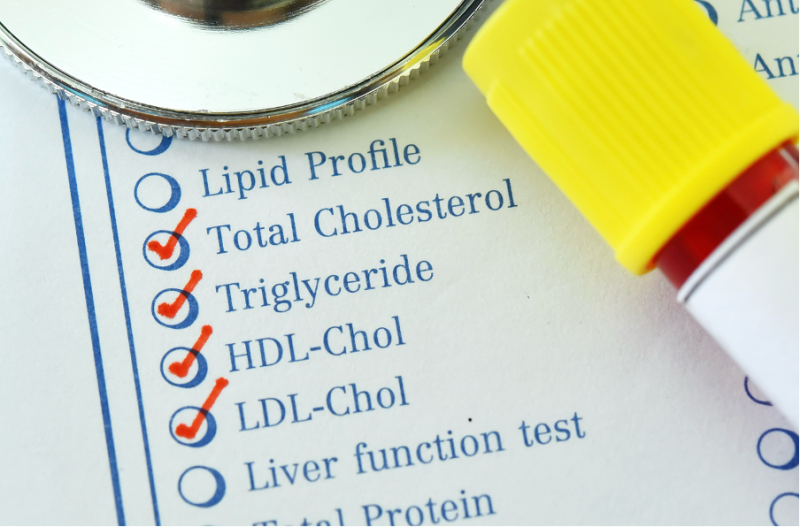
Other items not to be missed in the health checkup report are fasting blood sugar and blood lipid tests. Fasting blood sugar, measured after fasting for at least 8 hours, is the criterion for diagnosing diabetes. Since diabetes has almost no early symptoms, it is important to detect it early through regular checkups. Impaired fasting glucose, a pre-diabetic stage, carries a high risk of progressing to diabetes, requiring active lifestyle management. If your fasting blood sugar is between 100 and 125 mg/dL (pre-diabetes), it is recommended not to rely solely on the checkup result but to undergo an additional ‘Hemoglobin A1c (HbA1c)’ test, which shows the average blood sugar over the past three months. Cholesterol is divided into total cholesterol, LDL (bad cholesterol), HDL (good cholesterol), and triglycerides. When the balance between LDL levels, which build up debris on vessel walls causing arteriosclerosis, and HDL levels, which clean them up, is disrupted, the risk of cardiovascular disease increases explosively. [3] Since the risk criteria for bad cholesterol (LDL) vary per person, those who smoke or have high blood pressure must manage it much lower than the general normal standard to prevent vascular blockage. Monitoring how these two values change annually is more important than anything else for living a healthy life.
Item | Details to Check | Health Significance |
BMI | Weight status evaluation | Identify obesity and underweight risks |
Waist Circumference | Abdominal obesity status | Evaluate visceral fat and metabolic disease risk |
Blood Pressure | Systolic/Diastolic pressure | Identify hypertension and cardio-cerebrovascular risk |
Fasting Blood Sugar | Blood glucose status | Identify diabetes and pre-diabetes |
Total Cholesterol | Overall lipid status | Evaluate cardiovascular health and dyslipidemia |
LDL Cholesterol | Low-density lipoprotein | Increased risk of arteriosclerosis (Bad) |
HDL Cholesterol | High-density lipoprotein | Cleans vascular debris (Good) |
Triglycerides | Fat metabolism status | Identify metabolic syndrome and vascular risk |
AST·ALT·γ-GTP | Liver function levels | Identify fatty liver, hepatitis, and alcohol-induced damage |
Creatinine·eGFR | Kidney function levels | Early detection of chronic kidney disease and detox ability |
Third, Checking Liver and Kidney Functions: Organs That Fail Without Pain!

These are usually on the back page and easily overlooked, but liver and kidney indicators are vital. Liver function is checked through AST, ALT, and Gamma-GTP (γ-GTP) levels, which show how much liver cell destruction has occurred. These levels can help detect fatty liver, hepatitis, or liver dysfunction caused by alcohol. In particular, non-alcoholic fatty liver disease is becoming more prevalent alongside increases in obesity and metabolic syndrome, requiring regular monitoring.
Kidney function is evaluated by creatinine and the estimated Glomerular Filtration Rate (eGFR). The kidneys act like a water purifier filter for our body; once damaged, they are difficult to recover, and there are no symptoms in the early stages. When looking at kidney indicators, you should pay closer attention to the ‘eGFR’ rather than the creatinine level itself. If this value drops below 60, it is a signal that kidney function has declined. However, staying up all night or engaging in intense exercise before the test can temporarily worsen the results, so confirmation through a retest is more accurate. Furthermore, since early chronic kidney disease often has no specific symptoms, early detection through health checkups is paramount. If you have diabetes or hypertension, the risk of chronic kidney disease increases, so regular monitoring of kidney function is helpful. A result outside the normal range does not necessarily mean a disease, but if abnormal findings persist, further testing and professional consultation are required.
Finally, Health Checkup Results: Extending Healthy Life Expectancy with Annual Data

The true meaning of a health checkup does not stop at early disease detection. It lies in understanding your health status based on the results and preventing diseases by improving lifestyle habits. Just because blood pressure, blood sugar, or cholesterol levels are slightly outside the normal range does not necessarily mean immediate medication is required. Rather, many cases can be sufficiently improved by practicing healthy habits such as regular exercise, a balanced diet, maintaining an appropriate weight, quitting smoking, and moderating alcohol. Furthermore, it is important to view health checkup results as a trend by comparing them with previous results rather than as a one-time check. Even within the same normal range, if a value is steadily increasing, the risk of future disease may be rising. What if your fasting blood sugar was 88 three years ago, 93 the year before last, and 98 this year? All are marked ‘normal’ as they are under 100, but in reality, it could be a sign that your pancreas is gradually becoming exhausted. Therefore, you should keep your health checkup reports and develop a habit of checking your health changes through regular checkups. When this year’s report comes out, be sure to lay out the results from the past three years side-by-side and check the direction of the numbers as if drawing a line graph. Understanding and actively utilizing your report is the first step toward extending your healthy life expectancy.
<Daily Practice Checklist for a Healthy Life> □ Perform at least 150 minutes of moderate-intensity aerobic exercise (enough to be out of breath and sweat) per week □ Practice strength training such as squats and planks at least twice a week □ Increase the proportion of vegetables, fruits, and whole grains in your daily diet □ Reduce sodium intake by leaving soup behind and dipping sauces separately □ Quit smoking and set specific personal rules for moderating alcohol □ Get at least 7 hours of quality sleep and manage stress □ Collect health checkup reports from the last 3 years in one place and compare numerical changes □ If there are ‘caution’ or ‘suspected disease’ findings, do not delay and consult an internal medicine specialist |
[References and Sources]
[1] Korea Disease Control and Prevention Agency National Health Information Portal ‘Health Checkups Helpful to Know’, https://health.kdca.go.kr/healthinfo/biz/health/ntcnInfo/healthSourc/thtimtCntnts/thtimtCntntsView.do?thtimt_cntnts_sn=7
[2] Korea Disease Control and Prevention Agency National Health Information Portal ‘Health Checkups Helpful to Know’ (https://health.kdca.go.kr/healthinfo/biz/health/ntcnInfo/healthSourc/thtimtCntnts/thtimtCntntsView.do?thtimt_cntnts_sn=7)
[3] Korea Disease Control and Prevention Agency National Health Information Portal ‘Obesity and Health’ (https://health.kdca.go.kr/healthinfo/biz/health/ntcnInfo/healthSourc/thtimtCntnts/thtimtCntntsView.do?thtimt_cntnts_sn=39)
[4] Korea Disease Control and Prevention Agency National Health Information Portal ‘Dyslipidemia’ (https://health.kdca.go.kr/healthinfo/biz/health/gnrlzHealthInfo/gnrlzHealthInfo/gnrlzHealthInfoView.do?cntnts_sn=6715)
- National Health Insurance Service Health Checkup System Guide and Chronic Disease Guidebook (https://www.nhis.or.kr/nhis/healthin/wbhaca04500m01.do)
Chaum Appointment Inquiries: 02-3015-5005 | Chaum Premium Checkup Center, Life Center, 4-1 Cheongdam-dong, Gangnam-gu, Seoul

Frequently Asked Questions
What should I do if my fasting blood sugar level is between 100-125mg/dL?
This indicates pre-diabetes (impaired fasting glucose), so additional tests are needed. Do not rely solely on the screening results; it is recommended to undergo an additional glycated hemoglobin (HbA1c) test, which shows the average blood sugar over the past three months, to accurately confirm your condition.
Can I have abdominal obesity even if my weight is normal?
Yes, many Koreans have low muscle mass, leading to 'skinny fat' where visceral fat accumulates even with a normal weight. If a man's waist circumference exceeds 90cm or a woman's exceeds 85cm, it could be a sign that vascular aging has begun, so caution is needed.
What values indicate abnormal kidney function?
You should carefully check your glomerular filtration rate (eGFR). This is evaluated along with creatinine levels, and if your eGFR drops below 60, it is a sign of impaired kidney function. Since there are no symptoms in the early stages, regular check-ups are important.
Can I be relieved if all my health check-up results are normal?
Even if the results are within the normal range, you should be cautious if the numbers are increasing every year. For example, if your fasting blood sugar is rising annually (e.g., 88, 93, 98), even within the normal range, it could be a sign of declining pancreatic function, so it's good to compare results from the past three years.