2026-06-03
The Impact of Sleep Deprivation on Weight and Metabolic Health
Explore how sleep deprivation disrupts hormones like cortisol and growth hormone, leading to weight gain and metabolic issues beyond just diet and exercise.

When weight increases, we often first think of food intake or lack of exercise. However, recent medical research understands obesity not simply as a result of lifestyle habits, but as a state where the body’s recovery rhythm and hormonal balance have collapsed. Even if you eat the same food and maintain the same activity level, weight changes can manifest completely differently depending on the metabolic environment the body is in. In this process, sleep is increasingly gaining attention as a crucial factor.
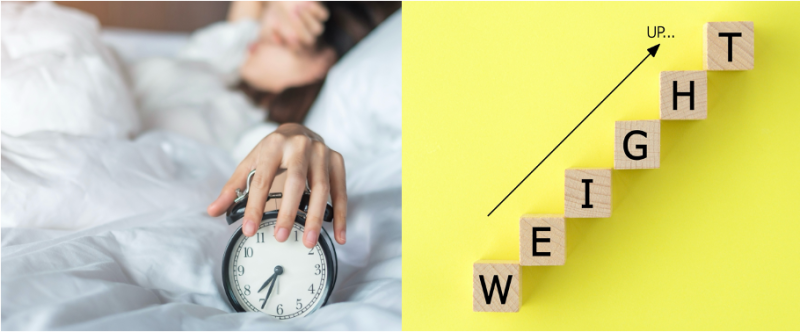
Sleep is not merely a rest period to end the day, but a time to organize energy consumed during the day and reset hormonal and metabolic systems. Without sufficient sleep, the body repeats the day without a chance to recover, perceiving this as a state of continuous stress. As a result, the body begins to react by storing energy rather than using it efficiently. In fact, a domestic analysis study using the 2023 Korea National Health and Nutrition Examination Survey showed that adults who slept less than 6 hours a day had a significantly higher risk of obesity compared to the optimal sleep group, and shorter sleep duration tended to correlate with increased Body Mass Index (BMI) and waist circumference. [1] Korea Disease Control and Prevention Agency. ‘Relationship between Sleep Duration and Obesity in Korean Adults: Using the 2023 Korea National Health and Nutrition Examination Survey’.
In obesity counseling sessions, I often meet people who complain, ‘I am eating less than before, but my weight is not decreasing.’ In such cases, checking the diet composition or exercise plan is important, but evaluating sleep is also vital. One of the first hormones to react to sleep deprivation is cortisol, commonly known as the stress hormone. Cortisol plays a role in raising blood sugar and quickly mobilizing energy in crisis situations, making it essential for survival in the short term. However, when sleep deprivation is repeated, the cortisol secretion rhythm is disrupted, making it easy for levels to remain high throughout the day. Experimental studies have observed significant increases in cortisol concentrations the following morning and evening after just a few days of restricted sleep. (Spiegel et al., 1999)

When cortisol is chronically high, the body reacts by storing fat rather than breaking it down. In particular, visceral fat centered around the abdomen tends to increase, and the effectiveness of insulin, which regulates blood sugar, decreases. Furthermore, muscle protein is easily broken down, leading to a decrease in basal metabolic rate, creating a state where weight does not easily drop even with the same meals. (Leproult & Van Cauter, 2010)
In other words, sleep deprivation acts as a major factor in creating a hormonal environment prone to weight gain. Additionally, sleep deprivation is closely related to a decrease in growth hormone secretion. Growth hormone is often perceived as important only for growing children, but it also plays a key role in adults for breaking down body fat and maintaining muscle mass and basal metabolic rate. This hormone is most actively secreted during the early deep sleep stages after falling asleep. If sleep duration is shortened or sleep becomes shallow, this secretion pattern easily collapses, leading to metabolic changes where body fat increases more readily. (Van Cauter et al., 2000).
Prolonged sleep deprivation can also disrupt the balance between cortisol, the stress hormone, and DHEA, which acts as a buffer. While cortisol remains consistently high, DHEA tends to relatively decrease, and this hormonal imbalance is reported to be associated with abdominal obesity, insulin resistance, and chronic inflammatory states. (Leproult & Van Cauter, 2010). At this point, the body becomes solidified in a ‘state where it is difficult to burn fat.’ Summarizing these processes, it is clear that sleep deprivation is more than just a lifestyle issue causing fatigue; it is a critical factor directly affecting weight and metabolic health. As the increase in stress hormones, decrease in growth hormone, and metabolic shift toward energy storage overlap, weight can easily increase, and once increased, it can lead to a repeated cycle where weight does not easily decrease. (Knutson et al., 2007).
Therefore, when weight management is not going well, rather than interpreting it solely as a lack of individual will or effort, an approach that examines whether the conditions for the body to sufficiently recover are met is necessary. In actual clinical practice, cases are observed where weight response gradually improves as sleep rhythms stabilize, late-night snacking frequency decreases, and appetite is mitigated. The recent trend in obesity treatment also places more weight on whether a metabolic environment has been created where the body can use energy well, rather than just ‘how little was eaten.’ Sleep is one of the most basic elements in creating that environment. When sufficient sleep and regular lifestyle rhythms are restored, weight changes can also lead to a more natural and sustainable direction.
1. Spiegel K et al. Sleep loss results in an elevation of cortisol levels the next evening. J Clin Endocrinol Metab. 1999
2. Leproult R, Van Cauter E. Role of sleep and sleep loss in hormonal release and metabolism. Endocr Dev. 2010
3. Knutson KL et al. The metabolic consequences of sleep deprivation. Sleep Med Rev. 2007
4. Van Cauter E et al. Slow-wave sleep and the regulation of growth hormone secretion. Endocr Rev. 2000
The Chaum Detox Slimming Center does not view obesity as a simple weight problem but conducts treatment based on an approach that considers individual differences in metabolic states and lifestyle rhythms. Through consultation with medical staff, we comprehensively evaluate current eating habits, sleep status, and physical activity patterns, and then work together to design manageable strategies that can be implemented in daily life.
Review: Professor Oh Hyo-ju, Chaum Detox Slimming Center
Inquiries
Chaum Detox Slimming Center 02-3015-5300 | 2nd Floor, Chaum, Cheongdam-dong, Gangnam-gu, Seoul
