2026-06-03
2025-2030 US Dietary Guidelines (DGA) Complete Overview | Key Dietary Changes Koreans Should Note
The US government recently released its updated Dietary Guidelines, influencing global nutrition. Key changes include minimizing added sugars, increasing protein, and limiting ultra-processed foods, offering valuable insights for Korean dietary habits.
Earlier this year, the US government announced its new
‘Dietary Guidelines for Americans’.
These guidelines are updated every five years and influence global nutrition policies and health trends.
Check out these key health strategy points, such as minimizing added sugars, increasing protein intake, and limiting ultra-processed foods,
which can also be applied to Korean dietary habits.
Hamburgers and sodas, processed foods, sweet coffees, protein supplements...
These diets are no longer exclusive to the US. Korean eating habits are rapidly Westernizing, and the rates of obesity, diabetes, and metabolic diseases are mirroring trends in the US.

The ‘2025-2030 Dietary Guidelines for Americans’ published by the US Department of Health and Human Services (HHS) and the Department of Agriculture (USDA) are official guidelines that outline the dietary direction for Americans over the next five years. Beyond being mere international policy documents, they offer realistic health messages that prompt us to reflect on our current eating habits. Today, with nutritionists Joo Hye-ji and Han Mi-ran from Chaum Food Therapy Clinic, we will explain the core directions of the 2025-2030 US Dietary Guidelines and the differences from the previous 2020-2025 guidelines.
Key Directions of Healthy Dietary Guidelines
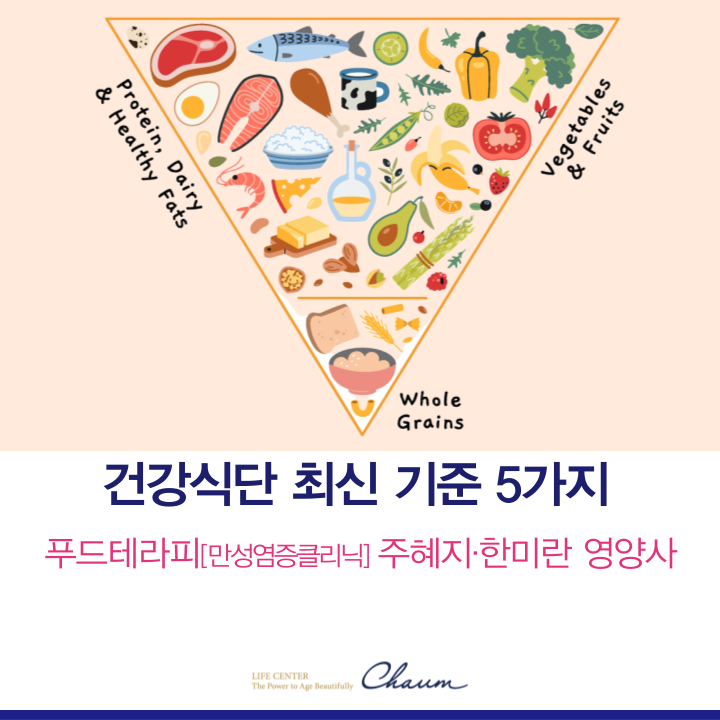
The core can be summarized into the following five points:
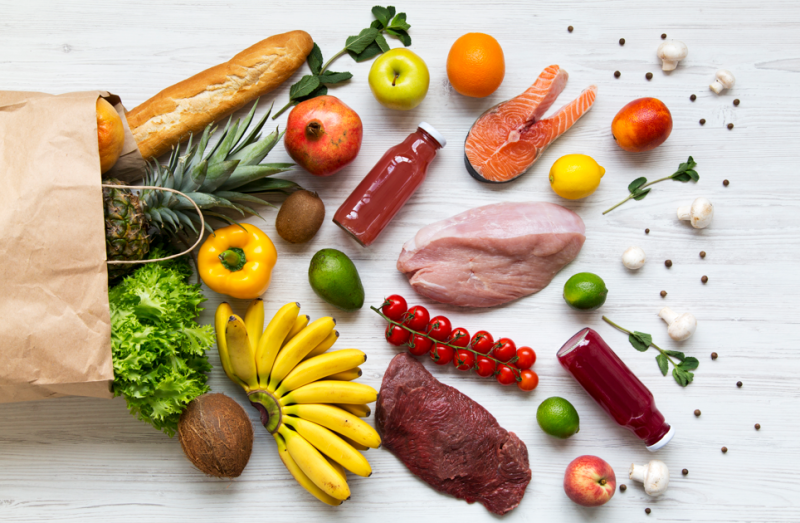
Emphasis on ‘Real Food’ consumption
Increased protein intake △
Minimize added sugars ▽
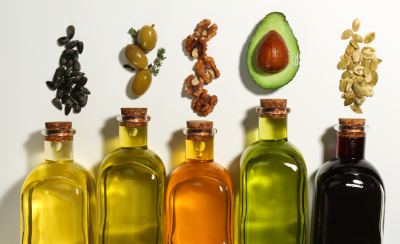
Rediscovery of healthy fats!
Limit ultra-processed foods
Healthy Dietary Guidelines ① Consume Real Food
The guidelines emphasize a diet composed of ‘Real food’, which are natural foods with ‘minimal processing’. It recommends consuming nutrient-dense foods such as fresh vegetables, fruits, and whole grains.
Healthy Dietary Guidelines ② Increase Protein Intake
To maintain muscle and activate bodily functions, the recommended protein intake has increased by approximately 1.5 to 2 times compared to previous standards. The goal is to consume 1.2g to 1.6g of protein per 1kg of body weight daily, with protein foods being essential at every meal. For example, a person weighing 50kg would aim to consume 60-80g of protein per day.
Healthy Dietary Guidelines ③ War on Sugar! Minimize Added Sugars
Sugar-free! It is recommended to reduce the intake of sugar and sweeteners to almost zero (less than 10g). The guidelines take a firm stance that even zero-calorie non-nutritive sweeteners are not a healthy option, ultimately advising to reduce the taste for sweetness itself.
Healthy Dietary Guidelines ④ Rediscovery of Healthy Fats - Not Always Low-Fat? NO
Instead of unconditionally choosing ‘low-fat’ foods, the guidelines recommend consuming natural animal fats within 10% of total calories. Appropriate intake of natural animal fat sources such as meat, eggs, seafood, and whole-fat dairy products can greatly help in managing cardiovascular health. *Whole-fat dairy products: Refers to dairy products that contain natural milk fat (approximately 3.25% to 4% or more) without artificial removal or reduction of fat from raw milk. They offer a rich flavor, abundant nutrients, and fats that aid in the absorption of vitamins A/D/E/K.
Healthy Dietary Guidelines ⑤ Limit Ultra-Processed Foods
Ultra-processed foods, such as frozen pizza, processed meats (sausages, ham), and carbonated drinks, which are low in nutritional value and contain artificial additives, refined carbohydrates, and excessive sodium, are major culprits of chronic diseases and their consumption is restricted.
How Does it Compare to the Past? 2020-2025 Dietary Guidelines vs 2025-2030 Dietary Guidelines
As shown in the [Table] below, the 2025-2030 US Dietary Guidelines include significant changes in several areas compared to the previous five years. They have been revised into more specific and realistic dietary guidelines.
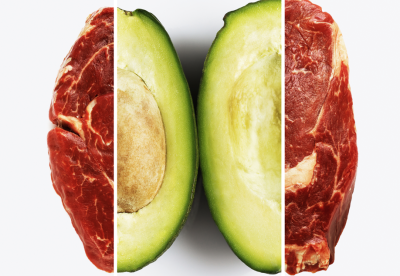
Notably, for dairy consumption, unlike the past emphasis on low-fat and fat-free options, the new guidelines recommend choosing unsweetened ‘whole-fat’ products.
Furthermore, regarding fat intake, previous guidelines recommended reducing saturated fat found in animal fats and consuming ‘vegetable oils’ high in unsaturated fatty acids. However, the new guidelines allow the consumption of saturated fat from ‘natural animal fats’ within 10% of total calories, thereby diversifying the types of fat sources that can be consumed.
Item | 2020-2025 Guidelines | 2025-2030 Guidelines | Change |
Protein | 0.8g per kg body weight | 1.2~1.6g per kg body weight | Increased protein intake at every meal |
Dairy | Low-fat, fat-free | Unsweetened, whole-fat | Healthy fat consumption |
Fats | Reduce saturated fat Replace with vegetable oils | Saturated fat within 10% of total calories Animal fats allowed! | |
Added sugars / Artificial sweeteners Refined carbohydrates | Consumption restriction ‘recommended’ | Consumption restriction ‘emphasized’ | Minimize added sugars Consume less than 10g per meal |
Gut health | Recommend fiber-rich natural fermented foods, water intake | Emphasize the importance of the microbiome (gut microbes) | ‘Kimchi’ officially mentioned among fermented foods |
Chronic disease diet | Low-fat, balanced diet | Low-carbohydrate diet recognized |
On the other hand, restrictions on added sugars, artificial sweeteners, and refined carbohydrates have been further strengthened, with added sugars recommended to be less than 10g per day, clearly indicating a commitment to reducing sweetness.


Our beloved Korean food, ‘kimchi’, also appeared on the official recommended list. In addition to the existing recommendation for fiber intake, the importance of the microbiome (gut microbes) for gut health has been highlighted, and the consumption of fermented foods such as kimchi and kefir has been included.
Finally, for chronic disease diets, moving away from the existing low-fat, balanced diet, the guidelines mention that a low-carbohydrate diet can be helpful, offering diverse and realistic approaches to disease management.
The ‘2025-2030 US Dietary Guidelines’ offer significant implications for Korean dietary habits.
The blog editor also reflected on their eating habits after encountering this information.
I vaguely thought ‘zero-calorie drinks would be fine~’ and didn't take alternative sugar intake seriously,
but I realized I needed to be more vigilant about sugar itself.
On the other hand, the news that bland low-fat milk and unsaturated fatty acids (vegetable oils) are not the only options, and that savory whole-fat milk and saturated fat intake are also recommended to a certain extent, was quite welcome.
Please review the information provided today,
and I hope my neighbors will also check their diets
for the health of themselves and their families.
Reviewed by: Nutritionists Joo Hye-ji and Han Mi-ran, Chaum Food Therapy [Chronic Inflammation Clinic] at Life Center
Medical fields: Chronic inflammation, dietary change coaching, medical nutrition therapy, stress management. Professor Lee Kyung-mi of Chaum Food Therapy [Chronic Inflammation Clinic] and CHA University School of Medicine is a family medicine specialist, focusing on disease prevention and treatment through food, and stress solutions. After graduating from Seoul National University College of Medicine, she completed an integrated medicine program at the University of Arizona, a global center for integrated medicine, to study new medicine focused on ‘healing’ beyond drug prescriptions and surgical treatments.
Inquiries
Chaum Food Therapy [Chronic Inflammation Clinic] 02-3015-5300 | 3rd Floor, Health Life Center, Chaum, 4-1 Cheongdam-dong, Gangnam-gu, Seoul

Frequently Asked Questions
How has protein intake changed in the new dietary guidelines?
Yes, it has been adjusted upwards by about 1.5 to 2 times compared to previous standards. It is recommended to consume protein at every meal, aiming for 1.2g to 1.6g per 1kg of body weight daily. For example, if you weigh 50kg, it is advisable to consume 60-80g of protein per day.
Can I freely consume zero-calorie drinks or artificial sweeteners?
No, consumption should be minimized. These guidelines explicitly state that zero-calorie non-sugar sweeteners are not a healthy option. Ultimately, it is recommended to reduce sweetness itself and limit added sugars to less than 10g.
Should I always choose low-fat products for fat intake?
No. Instead of unconditionally low-fat, the consumption of natural animal fats is allowed. Consuming appropriate amounts of meat, eggs, seafood, and full-fat dairy products within 10% of total calories can help manage cardiovascular health and positively impact vitamin absorption.
Are there any newly recommended foods for gut health?
Yes, 'Kimchi,' a representative Korean food, has been included in the official recommended list. As the importance of gut microbes (microbiome) emerges, the consumption of naturally fermented foods rich in dietary fiber, such as kimchi and kefir, is actively encouraged.
Are there changes in dietary guidelines for chronic disease management?
Yes, moving away from the existing low-fat, balanced diet, a low-carbohydrate diet has also been newly recognized. It is mentioned that a low-carbohydrate diet can be helpful in terms of disease management, offering a more diverse and realistic approach to diet.